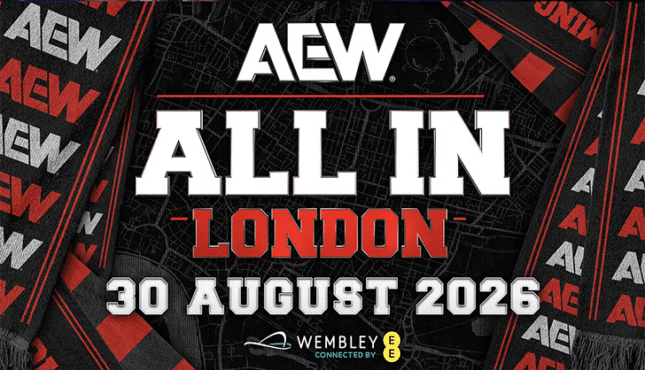
This weekend, All Elite Wrestling will make its return to Wembley Stadium, a venue that had a very specific place in pro wrestling history through the classic Bret Hart/British Bulldog match at Summer Slam in 1992, and there’s no doubt that AEW added to the lore of the building when it sold more than 81,000 tickets, a record-setting attendance, in 2023. That fact that the show is most known for CM Punk smacking Jack Perry backstage before he was fired to set up his current run as one of the top stars in the WWE is a different discussion for a different time.
That being said, the upcoming comeback to the stadium, a move that was made after the event was taken to Texas in front of just over 20,000 fans last year, has garnered mixed results, depending on your prospective.
Of course, it goes without saying that the first major show anywhere, or at least within an extended period of time, is going to draw the biggest number compared to recent follow-ups. That’s just the nature of diminishing returns of the entertainment business, it’s only “must see” for the audience once before it becomes optional since they already had the chance to experience it. All Elite had almost four years of built up anticipation from the European market to see the brand in-person, and they wisely maximized that opportunity with a record-setting house at Wembley Stadium a few years ago.
However, and this is the biggest key to the narrative of the company since that time, as far as its level of growth or lack thereof.
Bryan Danielson vs. Swerve Strickland for the main event of the initial Wembley event was fine, but it was much more of the pomp and circumstance of the “big show” than any individual match on the card that sold the tickets. As I said, the ability to watch All Elite live was the biggest factor for the success of the pay-per-view. After that original show, the chance to be there live is secondary since the novelty of that aspect wears off for the return so the substance of the product became more important in terms of drawing numbers.
As expected, the 2024 edition of All In saw a sharp decline in the numbers, as it drew a reported 53,000 fans that year. Don’t get me wrong, more than 50,000 tickets sold was a tremendous accomplishment, but a decline in nearly 30,000 seats sold from the prior year definitely said something about either the content of the show, the drawing power of the brand itself, or both. MJF vs. Adam Cole as the main event in a rather lame storyline that eventually flopped by the end of the year probably help either.
Clearly, management got the message since they took the show to Texas the following year with the main event of Adam Page vs. Jon Moxley for the AEW world title. The fact that Adam Page wasn’t cemented as a legitimate money-drawing star after that is yet another discussion for a different time. The point is, the move to the Lone Star state was theoretically a way to rebuild demand for London, but just a few days before the opening bell, it looks as though that strategy might not have been as effective as Tony Khan hoped.
According to Wrestle Tix, just over 42,000 tickets have been distributed for Sunday’s pay-per-view, which would translate to a half empty stadium when the show kicks off. Obviously, with the dynamic ticket-pricing model used with modern technology, it’s very possible that the remaining seats drop in price enough to get fans into the building. Still, outside of the potential walk-up sales, a portion that at best might be a few thousand, the current numbers tell a story about the status of the organization.
That’s the biggest takeaway from this story, All In 2026 is on track to be the lowest drawing AEW card in Wembley Stadium.
Granted, with how uncertain the global economy is, especially with energy costs increased across the board because of the ongoing conflict in Iran, it’s understandable that some fans would be hesitate to spend extra cash on non-essential purchases. At the same time, Tony Khan is rightly played the hometown card with Will Ospreay in the main event to challenge for the world championship so if that didn’t spur more tickets sold than prior years, again, it’s a statement about the perception of the promotion.
This week’s edition of Dynamite is important to the pay-per-view audience, as far as a go-home episode to try to generate orders, but for the live audience in the building, the British grappler’s quest for the championship is the biggest selling point. Within these specific circumstances, the under card is garnish so the needle will move based on the emotional investment in the hometown victory.
Since the 2026 event is on track to be the lowest drawing since their debut in Wembley Stadium, unless there are outside factors such as the economy, which is possible, the disjointed build to the match-up might be the reason why interest is only half of where it was just a few years ago.
Keep in mind, Will Ospreay joined the Death Riders, the heel group that injured him, during his journey to try to win the championship as a baby face. That conflicting narrative alone was enough to keep a story that writes itself as rather lukewarm. Ospreay rejecting the Death Riders, only for the originally baby face Kenny Omega to do a half-hearted attempt at heel turn further dilutes the narrative. Is Kenny Omega supposed to be the heel? What exactly was the motivation behind it since he just beat MJF for the championship less than two months ago.
For a company that usually puts work rate above everything else, even the chance to expand the audience, the build to Omega/Osprreay has been unnecessarily murky. The hometown guy trying to win the title in the stadium is an easy story, with competition as the glue of the narrative. Allow two of the top workers on the roster to put on the quality performance that they are known for, similar to the Shawn Michaels/Bret Hart bout at Wrestlemania. Instead there’s Omega as somewhat of a heel, but not really, and Ospreay floundering with less than stellar promos on television in the weeks before the event.
As I said, the biggest takeaway from this situation, specifically the lower ticket sales compared to the two other stadium shows, might be that All Elite Wrestling is definitely a niche product that happens to be on national television. Make no mistake about it, the existence of AEW is critical to the health of the industry since it gives both talent and fans options, but the product is so inside baseball that it will only retain the most die hard demographic of the audience. More importantly, not only does the in-depth detail of Japanese leagues or the Mexican scene make it more difficult for the current audience to follow the product, it alienates new fans from sampling it. Don’t get me wrong, there’s absolutely incredible foreign talent within the wrestling scene, but most of those organizations aren’t easily accessible to American fans so you can’t expect the national television audience to have any idea who Aaron Henare, Francesco Akira, and Callum Newman are when they make cameos on Dynamite. How many viewers of TBS have subscriptions to New Japan World? There’s a reason that more of an American audience is familiar with AAA after the WWE acquisition, because it became exponentially more accessible to exponentially more fans.
I’m not sure if Omega and Ospreay making references to New Japan during the pandemic in the interview segment from a few weeks ago did anything to sell their match for the AEW world championship. Again, how many viewers of TBS have any idea what happened in New Japan six years ago? The ticket sales for the pay-per-view this weekend could be a reflection of how the product is too niche. Since money is no object for Tony Khan and it doesn’t truly matter if the project makes money since his family can fund it indefinitely, maybe any criticism is moot, but when the hometown star in the main event can only sell half the seats for a stadium, it’s not exactly a successful situation either.
Until next week
-Jim LaMotta
Email [email protected] | You can follow me on Instagram, Facebook, & Threads @jimlamotta89