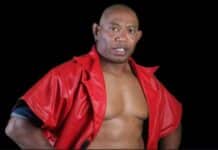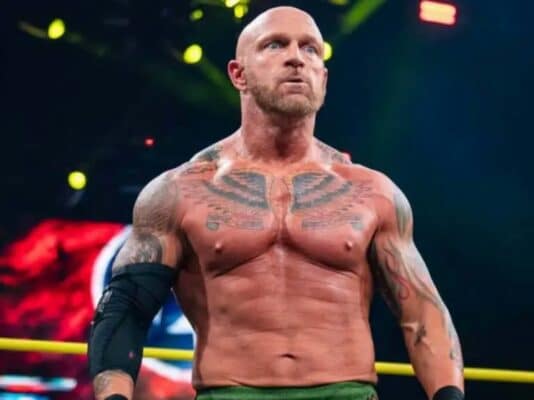
In light of Andy “The Butcher” Williams’ sudden and tragic passing after a tag team bout at Enjoy Wrestling’s fifth anniversary event in Pittsburgh at the age of just 48, I wanted to wait to pen this column in an attempt to give the pro wrestling world a chance to properly mourn, as many are still reeling from the shock of the gravity of that situation.
Andy Williams was still in the prime of his life, a brute of a professional athlete inside the ring and a talented musician that toured extensive outside of it. It just doesn’t make sense that he could be slamming in the ring and jamming on stage then abruptly his life is cut short.
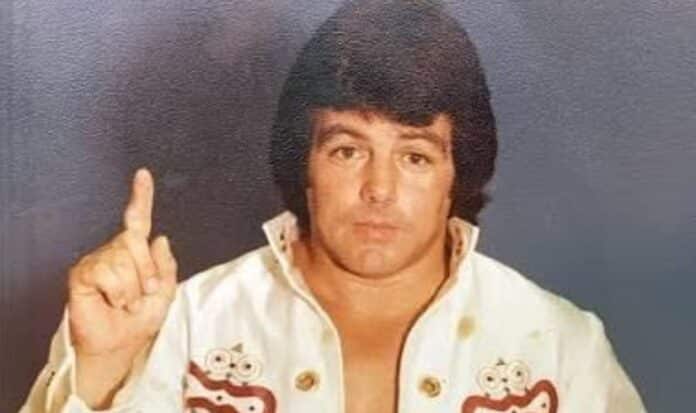
Unfortunately, the pro wrestling industry lost another grappler that same day, “Superstar” Bill Dundee, an institution of the legendary Memphis territory, especially at its peak throughout the 1970s and into the early-80s when the local matches drew thousands of fans to arenas throughout the circuit on a weekly basis.
In stark contrast, Dundee, who was 82 and had battled dementia for many of his final years, had lived a long and accomplished live, whereas given the nature of Andy Williams’ accomplishments, his story feels unfinished, as if he had more left to do.
In situations like this, the difference is that the wrestling world can celebrate the life of Bill Dundee, but must mourn the loss of Andy “The Butcher” Williams.
As mentioned, the grappler dubbed, “Superstar” had the chance to live a long and accomplished life. He broke into the business in the early-1960s in his native country of Australia, working for Jim Barnett’s original World Championship Wrestling group before he arrived in the United States by the mid-1970s.
This is where the view on Dundee’s career depends vastly on perspective. Outside of a brief cup of coffee in the Ted Turner version of WCW in1993 as a manager alongside Lord Steven Regal, Dundee never had the national platform or the exposure that goes along with it. Some might consider that only regional success, putting Dundee in a different category that some of the other major names from his era, but at the same time, it wasn’t as though Dundee wasn’t over enough to go elsewhere, but rather that he was so over in the Memphis territory that he didn’t have to go anywhere else to make a full-time living in the industry.
Keep in mind, Jerry “The King” Lawler is rightfully known as one of the best in-ring workers of all time for his ability to truly connect with an audience, regardless of it was as a heel or a baby face. The King knew how to get the paying audience emotional invested in what he was booked for over the course of decades. The difference was that Lawler got the national and international exposure as an announcer later in his career through his work during the Attitude era, a time when the business had its biggest audiences.
Don’t get me wrong, I’m not taking anything away from Lawler, but rather to point out that while “The King” ruled Memphis as a pillar of the territory, “Superstar” was right behind him in terms of the foundation of what kept the territory operating, even as the other regional organizations evaporated during Vince McMahon’s national expansion of the 1980s. I’m not sure if Dundee’s in-ring accomplishments are held within the same regard as Lawler since “The King” is more well-known to the causal fan, but make no mistake about it, there was a reason that Dundee was the one that could feud with Lawler for years, switching between the heel or baby face roles to still draw money. Of course, it was no coincidence that Dundee often wore a jumpsuit, and Lawler called himself “The King” when they wanted to gain fame in Memphis.
Besides their status as the top drawing cards in the area for literally decades, Lawler and Dundee had other similarities and their work that contributed to the reasons why they were so over with the audience for so long. While they could both work holds and maneuvers, neither Lawler nor Dundee were going to get comparisons to Lou Thez or Dory Funk Jr. in the squared circle. That’s not to mention that Memphis wasn’t based on the scientific aspect of the sport, more than anything, Memphis drew money based on the heat of an angle, which is why the emotional investment from the fans mentioned prior was key to the consistent business the territory had. Both guys were smaller in statue, but through their charisma and believability, they had audiences rallying behind them as baby faces or generating jeers as heels. Bill Dundee didn’t need to be a giant to convince the audience that he was a dangerous and manacling villain.
As I said, some might consider Memphis a smaller pond, and they aren’t necessarily wrong, but there’s something to be said for the ability to draw money to the point when someone reaches the level of a cornerstone of the region the way that Dundee did. However, he did venture outside of Tennessee for periods of time, mostly notably when he took over as the booker for Bill Watts’ Mid-South promotion.
Bill Watts’ ran the territory after Leroy McGuirk’s NWA Tri-State had folded, and despite a solid roster of talent, by 1983, Watts’ knew that he needed to add some variety to the events, opening the door for Dundee to bring in a slew of talent that had flourished previously in Memphis. In 1984, The Rock N’ Roll Express vs. The Midnight Express feud was one of the highlights that made it a notable year in the history of the promotion under Dundee’s direction. After a two-year stint working for Watts, Bill Dundee returned primarily to his stomping grounds of Memphis.
In an example of his sustained popularity, Dundee was able to find work in the area through more or less every permutation of Memphis, as the scale of the operations fluxed over the course of time as the industry on a national scene evolved. When World Class Championship Wrestling crumbled by the end of the decade of the 80s and the Memphis territory was struggling in the aftermath of closure of the rest of the territory system, Dundee worked for the USWA on a regular basis until it official shutdown in 1997. Still, as different groups took over the wrestling market on the regional level, Dundee wrestled for the majority of them during the latter portion of his career. He consistently found work in Memphis, regardless of the initials that promoted the shows. Bill’s son, Jamie Dundee also had stints of success in the business, primarily throughout the mid-1990s and into the late.1990s. As JC Ice in the tag tam PG-!#, alongside Wolfie D, Dundee and his tag partner worked for the USWA, the WWF, ECW, and even WCW for a handful of matches by 2000. Aside from appearing with the Nation of Domination at Wrestlemania in 1997, the biggest national exposure that PG-13 had was probably when they had a match against The Dudley Boys at ECW’s second pay-per-view, Hardcore Heaven that same year.
Amazingly, Bill Dundee still occasionally wrestled on the independent scene as recent as the early-2010s for cameos. In more recent years, with his health deteriorating, “Superstar” Bill Dundee still made appearances at autograph signings since he still enjoyed getting the chance to meet the fans. Despite the lack of a national platform throughout most of his career, there’s no doubt that Bill Dundee has an accomplished and notable spot in the history of the industry.
Until next week
-Jim LaMotta
Email [email protected] | You can follow me on Instagram, Facebook, & Threads @jimlamotta89