Is pro wrestling missing the risks?
That sounds like a contradictory question, especially when you consider the reckless stunts and the injury rate of the modern era, but there’s a big difference between silly risks in the ring that have an unbalanced risk/reward ratio, and the risks a promoter can take to evolve the presentation of their product. The evolution of the business will be debated as long as the industry exists, there will always be those that proclaim that pro wrestling was better back in their day, and sometimes they might have a point, but the other side of the coin is that some pundits will automatically yield to the past because of a previous successful track record.
Unfortunately, that’s one of the booking pitfalls that can lend itself to complacency and a stagnant product. One of the reasons that sports entertainment as a money-drawing commodity has survived the peaks and valleys of the business is that it often evolves with society.
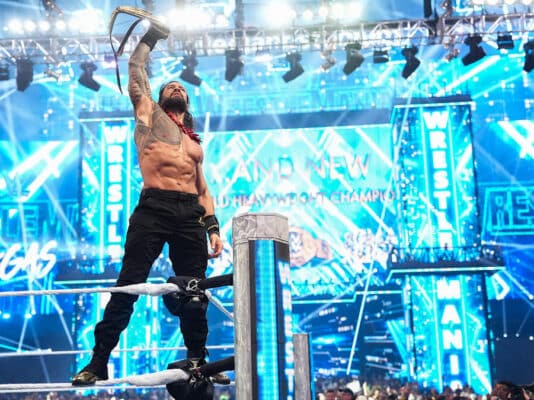
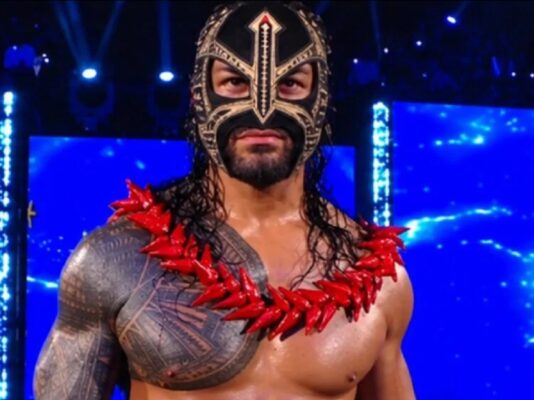
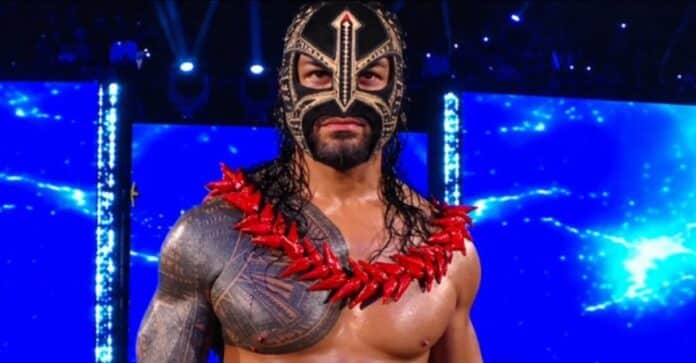
To be clear, this has nothing to do with wrestlers literally setting themselves on fire to try to pop the crowd, but rather the risk of a promoter to bet on a new star to be the next legitimate money-drawing performer on the roster. I pondered this question because I stumbled across a clip on Youtube of The Wrestling Observer’s Bryan Alvarez questioning the decision for Penta to do the job in Mexico City instead of winning the title in his native country. While Alvarez slates more toward the modern approach with sports entertainment, he has a much more balanced analysis than Dave Meltzer. who will defend anything All Elite Wrestling does at more or less any cost, presumably because it’s well-known that Tony Khan is a longtime subscriber to the newsletter. In short, I’d put more stock in Alvarez’s viewpoint since it appears to be less biased. As I wrote in a previous article, while I didn’t think that Roman Reigns was going to lose the championship, which is probably why they did the Sami Zayn switch on Smackdown, as a way to give the Hispanic audience something noteworthy from the tour, I thought that it would’ve been the right move to have Penta win the championship, not so much for the totality of the title run, but for the memorable moment it would’ve provided. Alvarez had similar comments in a video posted this week, debating if pro wrestling bookers were willing to take calculated risks to add fresh wrinkles to the fabric of the organizations or if they had to stick strictly to the initial plans.
It’s a question that stretches far beyond Penta vs. Roman, or any other individual scenario. Alvarez examined the current tends of what took place over the past year, but for this article, I’d like to look toward the future, particularly with how the lack of flexibility could impact the perception of the industry.
It goes without saying that an effective storyline needs a solid conclusion, but it’s just as important to factor in the reaction to the angle as it progresses. These are drastic examples, but when Steve Austin propelled himself in popularity, it was critical to push him into the main event spot of Wrestlemania in 1998 to be able to maximize his potential as a money-drawing star for the WWF. There was a specific time and place that the office had to capitalize on his momentum to make the most of it, and clearly, they did since he went on to become the biggest star in the history of the business. Management tried to catch lightning in a bottle again when they brought back The Ultimate Warrior in 1996, but it fell apart within three months so they had to pivot away from the nostalgia act, and more or less the same thing happened in WCW in 1998.
Speaking of which, since WCW folded, the business, primarily an industry with one key organization for the vast majority of that time, has struggled with a stagnant status more than once. Basically, without competition to push them forward, the WWE became too comfortable in the top spot, allowing personal agendas, not business, to dictate the direction of the product. If Nitro was an option in 2011, there’s no way Vince McMahon would’ve allowed the CM Punk negotiations to go down to the eleventh hour before he re-signed prior to winning the title in Chicago. If WCW was still in business in 2014, it wouldn’t have been such a struggle to get Bryan Danielson his rightful place in the main event of Wrestlemania after he was undoubtedly the most over wrestler on the roster.
Don’t get me wrong, the hotshot approach, which is basically what the Attitude era was for roughly five years, can lead to an even longer down period because it burns through so much material at such a fast pace, but there’s definitely a middle ground between crash TV and some of the drek we were subjected to in the late-2010s. The Roman Reigns forced baby face super push was an utter failure for years, generating so much discontent with the audience that it ultimately created the demand for what eventually became All Elite Wrestling. Vince knew that if fans wanted to watch pro wrestling in the United States then they were going to watch WWE. For context, Impact literally had ice fishing as its lead-in programming if anyone could find the channel that aired the show.
Obviously, All Elite Wrestling fell woefully short of expectations of another major competitor for WWE, which is why its first-ever television show seven years ago is still the highest-rated episode of Dynamite of all time. A portion of wrestling fans samples the product and decided it wasn’t something for them. That’s not to mention the steep decline in viewership after CM Punk left a few years ago. Still, with the billionaire Khan family funding the project, there are at least options for talent and the fans, which is why, despite some of its glaring flaws, the existence of All Elite Wrestling is very important to the overall health of the industry.
The flip side of that, and the contrast is apparent when you take into account the differences of previous eras of the industry, when the WWE was the only major league option, particularly after TNA was canceled from Spike TV, there were several years when the product was essentially exactly the same for years without any movement toward the future. Throughout most of the 2010s and even all the way through to more recent years, the WWE took the paint-by-numbers approach to bring in part-timers from the past that were expotentially more popular in their heyday than any of the full-time roster at that point. The Rock, Batista, and Brock Lesnar were given the top spots, which made the full-time roster look secondary. Vince wasn’t going to gamble of putting his chips of a new star because he didn’t have to, he could use a part-timer for a “quick fix” so to speak around Wrestlemania each year. The WWF in 1992 looked completely different in 1997, and that looked completely different by 2003. The modern WWE often looks exactly the same in terms of structure and presentation for several years at a time.
With the slew of retirements in recent years, there’s more pressure for the office to find the next generation of guys that are going to move the needle, and that’s not an easy task for a global, publicly traded corporation. That’s not just the main event scene, but rather the overall format of the product that is going to draw money in the future.
Of course, we saw Roman Reigns organically evolve into a major superstar after he was allowed to naturally do so, but as I’ve written in recent articles, the Bloodline angle is being recycled so there’s no doubt that the writing team has to find something fresh for everyone involved. Cody Rhodes is a top guy and does well in the role, but within the past year or so, even Cody hasn’t had a firm direction, especially after the lackluster build to Wrestlemania.
That being said, I’m not sure management is going to be too eager to shuffle the deck, mostly because it goes against some of the interests of TKO, which isn’t nearly as ominous as it sounds. This is where WWE is in a tough spot because it’s a machine that produces live content every week throughout the year with no off season, and signature events that require a card that will sell tickets. That alone is difficult enough, but it becomes even more difficult when you take into account that TKO quite literally has a legal obligation to serve its investors. That’s the biggest issue in terms of evolving the product, the WWE has a lot of masters to serve, and the stock price is a major reason why the company is worth billions of dollars. The bottom line is, TKO must serve its investors before it serves its fan base, and when it comes to investment, stability is the key. The status quo and guaranteed money through the media rights deals are what shareholders look for because its a relatively safe investment to yield a solid return on their money. The nature of what works for stock investment for TKO can conflict with the nature of what makes new stars for the WWE. That’s why I find it doubtful that the WWE will take any major risks to make new stars until they absolutely have to, but if that will be at the right time and place to make the most of it is a completely different situation.
Until next week
-Jim LaMotta
Email [email protected] | You can follow me on Instagram, Facebook, & Threads @jimlamotta89