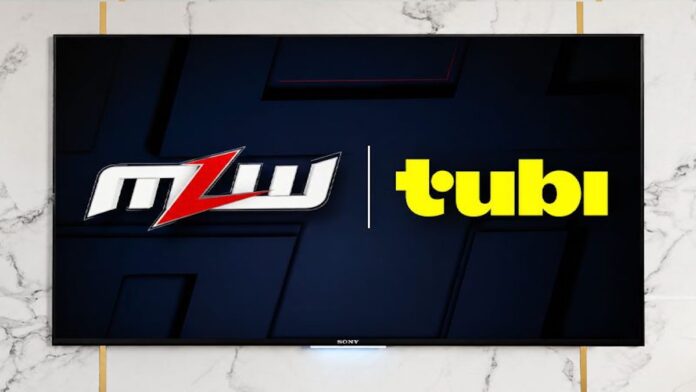
I have to be honest, when I heard that Major League Wrestling, the group that scored a $20 million anti-trust lawsuit victory against WWE a few years ago, was not only going to be on the Tubi streaming platform with their Fusion program that will air on Thursdays, but also plan a return to live pay-per-view in November, it was a little surprising. Considering how rock solid WWE’s slick legal team usually is, the fact that the company had to shell out millions of dollars, it more or less proved that WWE did in fact interfere with the MLW TV deal for the Reelz channel several years ago.
I’m still not sure why any of the suites would’ve put the organization in any legal jeopardy,because it’s not as though MLW was going to topple the global, publicly-traded corporation if their original television contract would’ve ran its course unobstructed on Reelz. That said, if you can win $20 million from Vince McMahon, as the settlement was before Vince was exiled in disgrace for misconduct allegations, it wouldn’t be unreasonable to take that cash and moderately retire. Trust me, if I land even a few million dollars, I’m going to quietly disappear to the middle of in Montana to continue writing about the sport without any reference or notice. As much as I love the heritage of western Pennsylvania, it would be much easier to avoid the family members that I don’t want to see at the holidays, or the general nonsense of modern society if I could slip away like DB Cooper.
It goes without saying that MLW boss, Court Bauer is much more of an entrepreneur than that.
The reason that I was surprised with the Tubi deal and the announcement of an upcoming pay-per-view in Chicago was mostly because of how much of the media landscape is still influx. The dust isn’t close to being settled in terms of what properties end up under specific banners, or who will own certain assets in the future. As an example, we’ve seen how the proposed Warner Brothers Discovery merger with Paramount was held up with lawsuits from almost a dozen states until a recent settlement was reached, allowing negotiations to continue before the deal is finalized. The buyout of WBD comes just four years after Warner Brothers and Discovery merged, signaling a further consolidation of media properties, as the advancement of technology influences not only the distribution of content, but also the amount of potential content that viewers have available to them at any given time.
It goes without saying that these moving parts of conglomerates and production companies have an impact far beyond the scope of just professional wrestling, but the reality is that those decisions can, and often have, had an effect on the sports entertainment industry.
As know, cord-cutting and streaming in general are becoming more commonplace as live channels are continuing to be included in a variety of streaming packages. The fact that the number of streaming services and their total costs have begun to hover around the same price of a traditional cable package is a different situation entirely. The fact is, with the consolidation of more assets under fewer corporations could eventually give those platforms enough ownership of content, as well as its distribution, to be able to continue to raise the price of streaming options.
The point being, it’s still a developing scenario that could change swiftly and drastically in the future.
As an example from the WBD merger with Paramount, depending on the fine print as far as what assets Paramount might leave on the table, such as CNN, to get the deal approved, it’s possible that all of the content on HBO Max, which includes the Discovery content as well from the 2022 merger, could end up on Paramount+ in the relatively near future. That gives Paramount thousands of hours of content that can be added to their streaming platform, a notion that the corporation can use to possibly increase the price of a Paramount+ subscription.
We’ve seen this type of combination before, even when it’s with in-house programming. Disney bought 20th Century Fox in 2019 and acquired the rights to Hulu in the process. Since Disney already owned ESPN, as the streaming landscape evolved, the corporation offered a bundle of Disney+, the option for live channels similar to cable through Hulu Live, and the ESPN+ platform. Of course, those purchases and the ability to bundle content allows for Disney to increase the price of the bundle package.
You can expect Paramount to do something similar when the details are finalized with the WBD merger.
While Tubi is owned by the Fox corporation, it’s important to note that Tubi is a free platform that is driven by ads. Tubi being one of the well-known free options is very important for Major League Wrestling, because in short, they don’t have to compete with the price of Netflix to watch Raw or the cost of an ESPN subscription for pay-per-views. One of the biggest topics of discussion after the majority of WWE content went behind a paywall was that the total cost to follow the product was getting too expensive for the average fan, especially in the current economic uncertainty.
Essentially, a free wrestling program within the modern landscape certainly makes it easier for the promotion to potentially expand its fan base, which is the entire point of getting on the new platform. The bigger the viewership, the more potentially revenue that can be made through ticket sales, commercials, and PPV buys.
That being said, from strictly a pro wrestling perspective, MLW finds itself in somewhat of a tricky spot. There’s more pro wrestling content available now than any other time in history so securing a portion of the market share is a difficult task. That’s not a knock on MLW, but rather to point out that with the endless amount of entertainment options today, it’s more difficult for any pro wrestling commodity to generate a sustained following than in the past. Every television network, Youtube video, and podcast are trying to get their piece of the pie.
It goes without saying that MLW isn’t looking to compete with WWE or AEW, and truth be told, they shouldn’t be. Major League Wrestling looks to offer an alternative to the corporate wrestling of WWE, and the nonstop car crash style of AEW. Profitability and revenue are the true barometer of success. MLW should look to find itself a profitable niche, taking the bits and pieces of those overlooked within the competition of the industry, and allowing those aspects to shine to their fullest potential. A prime example is that Killer Kross, who garnered a cult following before his WWE contract expired in August of last year, is the current MLW Heavyweight champion. For those that thought that Kross was underutilized and underappreciated in WWE, they can watch him get the opportunity to have a main event role in MLW. Some of the same can be said for Shotzi Blackhart, who was released from the WWE, but had notable popularity even after she went back to the independent circuit. She was the MLW Women’s champion until she dropped the title last month. Mistico is a guy that is wrestling literally around the world so his involvement in MLW is a good advertisement for the brand. I’m not sure the same can be said for Austin Aries or Matt Riddle, but they are at least recognizable names so it’s worth taking the chance.
One of the pitfalls that MLW will have to avoid, and they’ve already dodged it in some ways with the marathon tapings for the Fusion program that put several months of episodes in the can, is the predicament of being too small to be big, and too big to be small in terms of the scope of the promotion. That scenario is ultimately what caused ECW to crumble, and led to Ring Of Honor being sold to Sinclair in 2011. Thankfully, with the advancements in technology mentioned earlier, MLW still has to be careful, but has a better chance at an expansion that doesn’t eventually become a detriment to the organization.
It’s tough to compete with the billionaire that is Tony Khan, and the billionaire corporation of TKO so MLW has branded themselves as a specialty project in some ways, giving the audience something different than they are going to find elsewhere. Yes, that’s a moving target that can be more difficult at times, but the point is, giving underutilized talent, such as Kross and Shotzi, the chance to shine could be a unique selling point. It’s good to see that Bauer seems aware of his position in the industry, offering early-bird pricing for the MLW pay-per-view of $9.99, with an increase of $19.99 after that and then $24.99 the day of the event. It goes without saying that there’s a lot of competition for the PPV dollar in the industry between WWE, AEW, and the occasional TNA pay-per-views so making the Saturday Night Super Fight show more affordable is another strong selling point.
Of course, it will be interesting to see how the November 7th event unfolds in Chicago, especially after there were already two signature shows from WWE and AEW in the city last week, but the MLW website already lists the show as sold out. More than just the live attendance, it will be intriguing to see what takes place at the show, and how it might enhance the company’s status in the industry. Furthermore, if the pay-per-view buys are solid, it could provide a key metric that proves that MLW could find that previously mentioned profitable niche on an even bigger scale. Between the Tubi deal and the potential PPV success, this could be a win-win scenario for both those on the roster and the organization.
Until next week
-Jim LaMotta
E mail [email protected] | You can follow me on Instagram, Facebook, & Threads @jimlamotta89