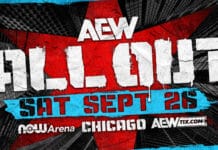
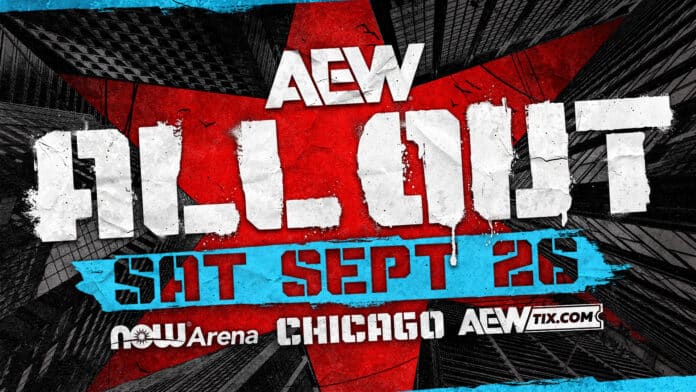
I wrote last week about the lack of hype or sizzle for All Out, mostly wondering if Jon Moxley was the right choice for Will Ospreay’s first title defense after he claimed the world title in his home country at Wembley Stadium last month. After such a peak moment, it’s almost unavoidable that there would be an unintentional decline in anticipation since the start of a fresh title run necessitates a reshuffle of the main event scene to allow for the champion to have opponents to work with. Still, I’m not sure if Moxley, who had the belt on a few different occasions, including for the drek that was the original Death Riders angle last year, was an opponent that was truly going to bring a spotlight to Ospreay in the main event picture of a pay-per-view. In theory, this was Ospreay’s first chance to be the A-side of a pay-per-view main event, a PPV that drew less fans into the building in Chicago than the When Worlds Collide house show held at the same time.
The lack of buzz around the main event seeped through the rest of the card, as most of the matches looked fine on paper, but to say that anything was deemed “must see” would be misguided. I’m sure this is going to sound repetitive since I have to mention it for almost every AEW PPV review, but it’s a continuous aspect of the product so it’s a point of discussion, the amount of overkill on these shows remains a hinderence to the overall presentation.
The show opened with Andrade vs. Pac for the National title, which is another meaningless prop since Tony Khan gives away belts the way that Oprah gave away cars in Chicago. This is meant as a compliment, not a criticism, but while everything they did was solid, I still thought a match-up with two athletes of this caliber was going to deliver more in terms of the level of in-ring work. It was almost as if this contest was structured to have bursts of action and then deliberate moments that moved at a snail’s pace, comparatively speaking. That’s why instead of the copy and paste format of roughly 20 minutes for each title match, a flaw that Tony booked throughout this line-up again, the Andrade/Pac bout probably could’ve been given a little more than half of that time and kicked off the event at a much better pace.Andrade retained the championship.
The headlines from the Darby Allin/Steven Borden vs. Kyle Fletcher/Kevin Knight tag match are obvious, Borden was legitimately knocked out during an ill-advised springboard spot gone wrong so the match was rightfully stopped. Again, it should be noted that the springboard toward each other was illogical, and while I’m not sure what it was supposed to be if it had been performed correctly, I know for sure that it’s not a spot that an inexperienced performer should attempt. That was actually the narrative of the segment before it was stopped, it’s painfully clear that Steven Border is too inexperienced to be on this stage so his opponents more or less had to carry him to make him look good. That’s not even a knock on the second generation Borden, he has an extensive athletic background that lends itself to making the transition to professional wrestling, he’s just being put in a very tough situation. He has only been wrestling less than a year, it’s unfair to expect him to be ready for live pay-per-view. Yes. I understand that as Sting’s son that there would technically be a place for him in All Elite Wrestling, and of course, there’s a natural storyline for him to work with as a second generation wrestler, but the reality is that outside of Kurt Angle, an Olympic Gold medalist, there are very few that would be up to the task of working on live television with less than a year experience. Furthermore, and again, this isn’t meant as a jab at Borden, but both Kevin Knight and Kyle Fletcher are too talented with too much potential at this point in their careers to be booked for a segment that assigns them the task of making the rookie performer look decent in the ring. The horse has left the barn so to speak since Steven Borden was already put on television, but I have to say that I think it would’ve been a lot more productive if he could’ve worked the independent scene for a year or two to gauge his progress before he was put on AEW television.
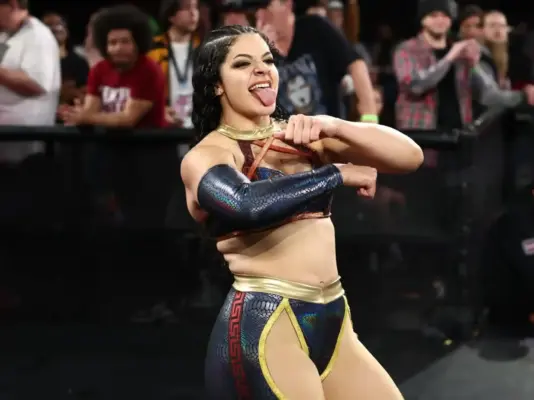
Thankfully, it was noted that Borden was taken to the hospital and it appears that he’s going to be okay after the scary moment. That said, the combination of such a concerning stoppage, along with the fact that it seemed like most in the building didn’t know who Dani Luna was, more or less tanked the next segment. I’d argue that Persephone isn’t over enough to get a reaction from the crowd, and I’m honestly wondering if Tony Khan signed her to a contract simply because she’s a champion in CMLL. It was well-known that Dani Luna was on her way to AEW after she finished up with Total Nonstop Action recently, but it appeared that nobody thought she’d be the one to answer the open challenge. If you wanted to know the lack of effectiveness of TNA’s platform on AMC, this might be an example of it, as the crowd was relatively quiet for Dani Luna and the majority of this segment. The pace of the bout was clunky, and besides a German suplex spot on the apron, there wasn’t much of a response from the audience. Persephone retained the TBS championship, but this segment was forgettable, especially on a show that went over four hours.
Kazuchika Okada vs. Tommaso Ciampa was given the standard twenty minutes, but it was actually a match that justified the time it was given. Unfortunately, at this point in Okada’s career, despite his stellar legacy as one of the best in-ring workers of his generation, you never know if he’s going to mail it in or get into second gear. It was the latter here, and the argument could be made that this was the best match of the night. Everything they did was crisp and smooth, it was a good representation of what the selling point of All Elite should be when you subtract the counterproductive nonsense that eventually litters almost every major show. A lot of the bouts in the company, specifically on pay-per-view are just a series of spots without rhyme or reason, but Okada vs. Ciampa had the “glue” for everything to come together to allow for a pace that emphasized the narrative of the action. Without that glue, the viewing experience boils down to endless moves and risky bumps without any compelling drama. You can only watch the some car crash spots so many times until it becomes tedious. In short, there should be more of what Okada and Ciampa did here, and less of some of the pitfalls that took place later in the night. Okada retained the belt.
Ironically, a prime example of useless overkill and meaningless risks was the next bout on the card. The AEW Women’s Tag Team Title match was a mid-card feud, which is fine, that was somehow given the opportunity to dilute the effectiveness of a bigger bout at the end of the event. Quite simply, this storyline didn’t justify the tables, barbed wire, thumbtacks or blood that was used in this segment. It took away from the tag team ladder match that served as the co-main event, which was a lot more important, particularly because it’s probably the last ladder match that Adam Copeland and Christian will work in their storied careers. This women’s match was chaos just for the sake of chaos, and taking into account that two other matches had blood on this event, there was no reason for it here. Again, this mid-card feud didn’t need any of this, and in truth, these four athletes are talented enough in the ring that they could’ve had a better match without all the gimmicks. The Brawling Birds retained the titles.
The Trios title match was next, and while there was a lot of athleticism, I found this segment to be rather moot in the grand scheme of things. It was fine, but it was unnecessary since I don’t think it truly added anything to the show. The trios division is based in lucha libre because it suits that style, and beyond The Elite trio of Kenny Omega and The Young Bucks, the trios titles haven’t served a purpose in the company. This 25-minute six man tag was more or less just an exhibition, and considering that the broadcast went almost four and a half hours, it would’ve been nice if this was saved for television so the pay-per-view could’ve went off the air before midnight. Swerve and The New Level retained, but it can’t be understated how much the Trios titles have zero cache in terms of importance.
Thekla defeated Willow Nightingale to become the number one contender for the AEW Women’s championship. This bout went about 12 minutes and didn’t overstay its welcome, which is something that Tony Khan should utilize more often. This was a solid match, but it will probably be unintentionally lost in the shuffle based on its position on the card.
I was skeptical about the tag title ladder match, but this delivered in a big way and will be one of the more memorable bouts in AEW history in the future. It goes without say that there was AEW’s way of booking Edge and Christian in another TLC match to capitalize on their history around the stipulation, but they were smart enough not to try to be a carbon copy of the original series from 25 years ago. This was all action and delivered the expectations of All Elite chaos without getting too ridiculous. The set up for spots throughout the segment made sense, and there was compelling drama, specifically toward the conclusion of the contest when each team tried to reach for the belts. Basically, this was a gimmick match, not a furniture contest, which was the key to the presentation. The bump that Stokely took from the ladder to the floor looked brutal as he overshot one of the tables and only caught the second one so it looked like the top half of his body hit the floor without anything to absorb the impact. Christian looked like he got a hard way cut on his face, and Dax Hardwood bladed. The co-main event of a gimmick match is where blood makes sense, which is why it wasn’t need in the women’s tag match earlier in the night. The ladder match was a fireworks show will at least some level of common sense, which is why it stood out in terms of quality. The Young Bucks eventually got the belts to win the titles.
The main event went over thirty minutes, and it was a quality performance in terms of what they did. The problem was that this didn’t need to be and quite frankly, shouldn’t have been an attempt to do another thirty-minute New Japan style bout the way that Will Ospreay and Kenny Omega did in London. The narrative was forced, with nothing organic, even if everything was well done in execution. These two were too concerned with working a carbon copy of All in with the phony attempts at drama instead of a spontaneous sequence that built drama around who was going to be the champion at the end of the match. Just as he did in London, Ospreay was bleeding, but it didn’t really add anything to the bout since there wasn’t a point where it looked like the champion was in jeopardy. Moxley’s slow and plodding pace at different points didn’t help the situation. The focus was on the flimsy storyline where Ospreay joined the Death Riders, not the championship, which hindered the segment. The series of run-ins toward the finish worked, if for no other reason than it picked up the pace of the segment. Eventually, Ospreay hit the elbow strike to retain the championship.
Until next week
-Jim LaMotta
E mail [email protected] | You can follow me on Instagram, Facebook, & Threads @jimlamotta89