“Cash Rules Everything Around Me” -Wu Tang Clan
For as long as there has been any level of wide distribution, there has been the debate between the art and the commercialism of media. Sure, pop culture is a form of success, but the sizzle of trends fade, and the true substance of the entertainment industry stands the test of time. Carlos Mencia had a cable show at one time before he was exposed as a hack, whereas George Carling was a comic prophet that still remains relevant today nearly two decades after his death. A slew of bubble gum pop groups have to wait until their music becomes old enough to draw a nostalgic crowd to get a second run of live performances. Neil Young’s music has endured for over half a century. God bless Tom Green and the crew that produced Road Trip in 2000, but the raunchy comedy isn’t exactly held in the same regard as Casablanca.
Some will cite revenue as the only true barometer of success, and they might have a point, but the counter to that is that the substance of an art form can draw more money over the course of time than a trend that draws big in the moment.
Professional wrestling is no different, and the debate between sizzle over substance has existed almost as long as the business itself.
The world knew the WWF in the 80s because of the Rock N’ Wrestling connection, but diehard fans knew that bell-to-bell, the pyro and ballyhoo of New York couldn’t hold a candle to Jim Crockett Promotions. The Hulkster was going to go through his immensely popular routine and drop the leg with a very family sequence of maneuvers to polish off a very similar cast of opponents. Ric Flair was one of the hardest working guys in the business and was going to be able to work with anyone. Flair was the iron man of the ring when the one-hour draw wasn’t uncommon. At the same time, Vince McMahon’s business plan and marketing approach were top-notch compared to the Carolina-based organization. Vince knew how to package and sell his product to the widest audience possible, and as a result made enough money to cherry-pick enough of the regional stars that he was able to continue to expand his promotion from the north east to a national platform. The action figures, t-shirts, magazines, cartoons, and ice cream bars put the WWF in another league, enhancing the public perception of the brand. On the flip side, Crockett offered a limited amount of merchandise and the distribution was minimal, especially compared to the WWF.
Don’t get me wrong, Dusty, The Road Warriors, The Four Horseman, The Rock N’ Roll Express, The Midnight Express, and Magnum TA were a part of a legendary roster. The argument could be made, depending on what someone looks for in their wrestling, that the NWA had a much better in-ring product than the WWF in its heyday, but the business plan of the WWF was far superior. As we know, Crockett spent itself into debt and was forced to sell to Ted Turner in late-1988 to keep pro wrestling on TBS.
At that phase of the industry, sizzle won over substance.
As mentioned, the debate more or less has always been, and probably always will be a part of the discussion of pro wrestling. The under card of WCW in the late-90s was stellar, but Steve Austin vs. Vince or The Rock in the main event slots ultimately tilted the tide of the wrestling war of that era. Even today, when the WWE is touting record-setting revenue, there are some fans that insist the match that got seven stars in front of a much smaller crowd was better. There’s not necessarily a right or wrong answer, it merely depends on perspective.
However, there could definitely be a point where the commercialism, especially of corporate pro wrestling jumps the shark, souring even the most dedicated fans in the process. TKO and the suites that run the global, publicly-traded conglomerate might be tip-toeing on the fine line where they attempt to squeeze every dime out of the product to the point that it actually costs them a portion of the audience in the process of their attempts to appease stockholders.
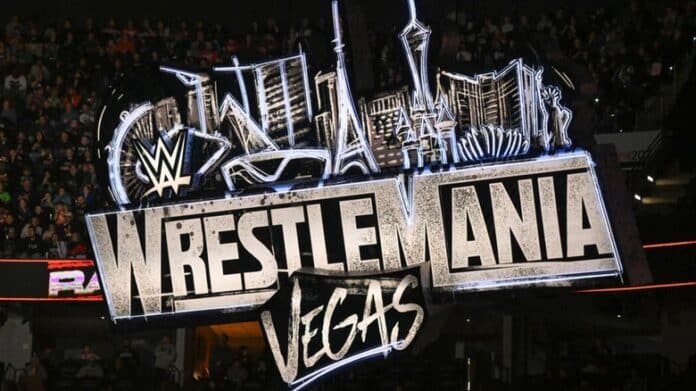
It goes without saying that Wrestlemania 42 was a prime example of this, both before and after the event. After the weekend wrapped up, The Las Vegas Review Journal reported that there was an estimated 19,000 fans less in town this year compared to last year for the sports entertainment spectacle. It’s not shocking when you take into account that just two weeks before the pay-per-view, there was a 30% decrease in the amount of tickets sold compared to 2025. It remains to be seen how much WWE did or didn’t paper the house to get fans into the building. While still being deemed a success, partially because of how much Las Vegas needs anything possible to boost its sluggish tourism numbers in recent years, the decline in the amount of fans the PPV brought to the city is undoubtedly a reflection of the astronomical ticket prices, as well as WWE’s attempts to remedy the situation way too late in the game. By the time the 31% and then 25% discounts were put into place, the costs of everything else, including plane tickets and hotel reservations, already increased beyond what the ticket sale could cover.
Despite the money made, this should be a message to WWE brass that they priced out a portion of their fan base, but based on TKO CEO, Mark Shapiro’s recent comments, the corporation doesn’t seem be concerned with alienating its core audience, but rather expects to draw for a wider demographic instead.
I could be wrong, but professional wrestling is such a unique genre that it’s not as simple as some executive proclaiming that a paint-by-numbers approach will translate to the sports entertainment industry. The bottom line is, the WWE isn’t the UFC. Yes, there was always some crossover because of the male demographic, but the ticket scale, fan base, and promotional strategies are completely different. A top name in MMA might fight twice a year, particular since Zuffa sold the organization in 2016. The WWE has to market its main event talent for pay-per-views every month. In many ways, it’s an apples to oranges scenario, despite still being in the produce section.
That might be why TKO jumped the shark with the amount of ads, commercials and sponsorships that littered the Wrestlemania broadcast to the point that it was almost as if viewers were watching infomercials with a side of wrestling, as opposed to the event being served as the main course.
Don’t get me wrong, advertisers and commercial revenue are ultimately how Vince won the wrestling war and became the undisputed king of sports entertainment, but even McMahon, as deviant as he might be in his personal life, held the sanctity ring in such regard that he wouldn’t reduce the professional presentation of his shows to live action billboards. As we’ve discussed since the merger with UFC a year and a half ago, the traditional troupes of the pro wrestling business have no cache with the Endeavor business executives. Still, as cliche as some of those troupes might’ve been, there was often a reason McMahon kept them in place over the years.
Vince famously refused to have an logos or sponsorships on the canvas since he saw it as a cluttered look to what should be a clean presentation. This is one of the few things that TKO has done with the sole intention of squeezing every dime possible from the live events, but the logos on the mat actually give the product somewhat of a more modern look since those type of advertisements have been used in boxing and the UFC for years. However, and this is the much bigger point, TKO goes a step too far when they slap logos on literally anything at ringside to the point where, again, it looks like the fans are watching an infomercial that happens to have pro wrestling going on around it, which is just silly. Slim Jim and pro wrestling are a perfect tag team, which is why iconic Macho Man still has a role in their promotional material that is blended with the current roster, but the Slim Jim stickers on the tables under the ring to be used in spots during matches is a step too far. Nothing takes the spontaneity out of the performance or takes the audience out of the moment more than if the product placement has to take center stage.
Furthermore, the amount of commercials, specifically on a platform behind a paywall, is insane. There was a time that one of the major selling points of a premium platform was that part of what you were paying for was the ability to avoid commercials. When you pay for access to such a service, particularly with the way that TKO has commercialized almost every aspect of the presentation, it almost has a “give us your money” narrative rather than enjoy the show you paid for since the audience is constantly being sold something at any given more during the broadcast. The nearly 45 minutes of downtime between the end of the previous match and the start of the main event on night one of Wrestlemania could’ve ruined the overall viewing experience.
With the way viewers are bombarded with a sales pitch not only during the matches, but even between the segments with the seemingly endless commercials, it really kills a lot of the enthusiasm for the show itself. When Adam Weitsman, who became a billionaire through crypto, which is more of a work than sports entertainment, was randomly at the announce desk with Michael Cole and Wade Barrett for the Jade Cargill/Rhea Ripley match on night two of Wrestlemania, it completely jumped the shark to a level that unbelievable ludicrous. TKO is worth tens of billions of dollars, do they really need this guy’s cash to allow him to make an illogical cameo? If an appearance on Wrestlemania literally has a price to it, doesn’t that take away from the star power of the performers? You either have to be a top notch performer, or be willing to spend the cash without any of that ability to be a part of Wrestlemania. Ironically, Weitsman pled guilty to 86 felon counts of bank fraud in 2004 so maybe he isn’t completely out of place in the wrestling business after all.
It goes without saying that advertisements and sponsorships are an important part of the business model of WWE, and there’s nothing wrong with that. But there’s a different between maximizing those revenue streams and commercializing to such a degree that it ruins the viewing experience. I really don’t expect the causal fans to continue to follow or invest into the product on a long term basis if this is the new TKO formula. Maybe that’s why TKO continues to look for more of a global reach rather than an attempt to reestablish the domestic fan base? The reason being, especially in the domestic market, there are so many entertainment options through modern technology that eventually only the most diehard fans are going to be willing to sit through 30 minutes of commercials between matches.
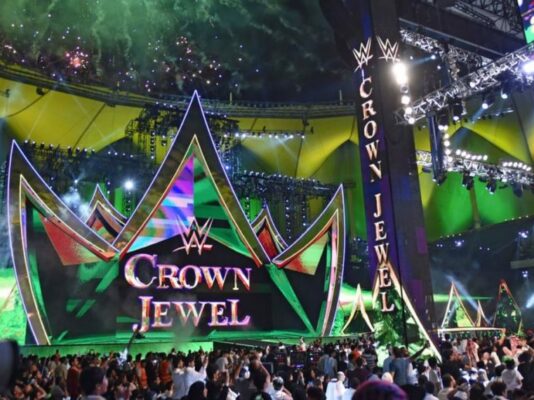
I’m just speculating, but the waves of ads might be by design as a way to inflate the value of the company before an eventual sale to Saudi Arabia. Keep in mind, the corporate suites have no alliances with the history of the business, the WWE is just another commodity in their portfolio so I wouldn’t be completely shocked if they were willing to sell the pro wrestling portion of TKO for the right price since it would boil down to a successful return on investment. Obviously, it depends on how the business trends continue over the next decade, but the Netflix deal ensures major profit, in addition to the ESPN deal and the TV contract that keeps Smackdown on the USA network. Taking into account that he Saudis have spent a few hundred million on importing the WWE brand to their country and that number will eventual top the billion dollar mark by the end of the current deal, it’s not impossible that at some point it would became the more efficient financial move to buy the company outright than to continue to purchase a few individual events per year. Remember, Saudi Arabia has already spent billions of dollars in an effort to bring a myriad of western entertainment acts to the region so it’s not out of the question that they could make TKO a serious offer to buy the WWE at some point in the future.
What do you think? Share your thoughts, opinions, feedback, and anything else that was raised on Twitter @PWMania and Facebook.com/PWMania.
Until next week
-Jim LaMotta
Email [email protected] | You can follow me on Instagram, Facebook, & Threads @jimlamotta89