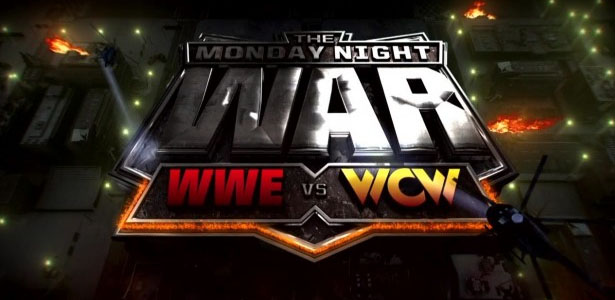
This week marks 25 years since Vince McMahon bought World Championship Wrestling for pennies on the dollar, a transaction that altered the course of the industry forever and thus the ripple effect can still be seen today. The Monday night wars have been covered ad nauseam, but there’s also a reason why there was so much meat on the bone and an entire plethora of podcasts are dedicated to that span of five or so years in the business. Even the series of events that led to the events that eventually led to the Attitude era are covered in granular detail through the slew of video podcasts available today.
We all know that the steroid trial of the early-90s put a series of events in motion that led to Hulk Hogan distancing himself from the WWF, and when his acting career didn’t take off, he was more than willing to take Eric Bischoff’s offer for one of the most lucrative contracts in the history of the business. In conjunction with that, we know that Vince’s youth movement of “the new generation” in an attempt to rehab the image of his company put Macho Man at the announce desk at the age of 42 so he also made the jump to WCW by the end of 1994. Of course, the slum of the industry during that time put pressure on the WWF to survive some lean years, while the Turner side of things looked to just get to a place where the wrestling project didn’t lose money every year the way that it had for the majority of the time since the media mogul bought Jim Crockett Promotions in late-1988. Hulk and Randy Savage had made big money during their tenures atop Vince McMahon’s sports entertainment empire, but that simply wasn’t the case, comparatively speaking, for the new generation crew. Bret Hart, Razor Ramon, Shawn Michaels, Diesel, and a myriad of other performers were regulated to smaller venues, as some of the early episodes of Monday Night Raw were taped in high school gyms. That’s a long way away from when the Rock N’ Wrestling era was thriving a decade earlier, and the WWF ran sometimes two or three towns a night. Typical “B-towns” because a part of the first loop because the business had tumbled in both reputation and gravitas since the days of Cyndi Lauper and Mr. T with celebrity cameos.
Between the steroid scandal and the accusations of misconduct that followed it, sports entertainment was dubbed low brow, reducing itself to the lowest cliches and criticisms of the genre, hence why a line-up of cartoonish gimmicks were used to try to rebrand the WWF. Still, the time it took to truly rebuild the presentation of the organization of technicians like Bret Hart and over-the-top showman like Shawn Micheals to replace the steroid line-up that were gassed to the gills like The Ultimate Warrior and Hulk undoubtedly had an impact on the revenue of the business. The general public had to be sold the new generation, they weren’t just going to accept it over night, especially all the distrust from the audience after the previous mentioned scandals.
It didn’t take Scott Hall or Kevin Nash long to realize that chasing the big bucks in the WWF was going to take time in the ring that they might not have, especially Nash, who started in the business after a series of knee injuries derailed his aspirations for a basketball career. The jump that The Outsiders made to World Championship Wrestling in 1996 was one of the most important decisions in the history of the business, as without the New World Order as the fuel of the engine, albeit for a relatively short period of time, there simply wouldn’t have been an Attitude era from the WWF in response to it.
This is why competition will always be key in the industry, and maybe why it’s so frustrating to watch All Elite Wrestling fumble key opportunities today.
WCW had the NWO with a reality-based presentation, and at the time, it was something that wasn’t seen often on pro wrestling programming. We know that Vince countered with Steve Austin, DX. and pushing the envelope further than WCW could go under Turner’s infamous standards and practices. When Mike Tyson was banned from boxing for more than a year after he snacked on Evander Holyfield’s ear in June of 1997, he was the special guest referee for Wrestlemania the following year. Tyson was literally too uncontrollable to be on boxing pay-per-view, but fans could certainly pay to watch him on a WWF PPV.
One of the reasons the ratings war is so fondly remembered, and sometimes seen through rose-colored glasses in hindsight, is that in many ways, sports entertainment was like the wild west for a period of time. Much like society itself when Howard Stern had twenty million daily listeners, Marylin Manson sold five million albums, and Jerry Springer had pay-per-view specials, pro wrestling became edgier. Anything could happen on any given week and there truly was a “can’t miss” aspect to pro wrestling television.
Plus, Extreme Championship Wrestling not only revolutionized the presentation of the business in America, it provided much of the push that the industry needed to get out of the slum mentioned prior of the early-90s. ECW was described as the Napster of the pro wrestling business, as it changed how everything was done, but it was, by nature, never made to last.
Speaking of not being made to last, as WWF and WCW did everything they could to try to win the ratings competition each week, they missed the forest through the trees in some respects. They were an attempt to threw everything possible at the wall each week and burn through angles at a rapid pace. Anything to keep the audience from changing the channel to the competitor. The major problem with the hot shot approach, specifically for an extended period of time with crash TV on a regular basis is that there will be an equally as long, if not exponentially longer, down period to after it. History proved that to be the case, as the business as a whole arguably never recovered from the closure of WCW in 2001. As much as ECW was some of the most fun in wrestling history, as it was just cool to be along for the wild ride, as I said, it wasn’t every going to last. That’s the double edge sword of the extreme formula, but as the same time, it was very much a time and place as far as its fit within the pro wrestling landscape of the 90s.
The industry could’ve marched forward without ECW since most of its stars were picked up by the other two national groups anyway, but when Turner folded WCW, that was also the end of the foundation of the Jim Crockett era as well. It would be exponentially more difficult for another commodity to be competitive if it had to start from scratch. Again, history proved this to be correct when the closest entity to a competitor was almost two decades later when a billionaire family with an extensive business portfolio funded the launch of All Elite Wrestling.
However, outside of the dollars and cents of the business side of what the final week of the Monday Night war meant in 2001, it’s somewhat of a reflection from those that followed it in real time a quarter century ago. While the vast majority of WWF programming from that era doesn’t hold up today if you watch it in retrospect, which is probably why WCW actually does in 2026 since it often took a different approach, the Attitude era is so revived by those that saw it as it happened because it was simply an exciting time to be a fan. As mentioned, some of the Russo drench for the WWF and then WCW looks terrible in hindsight, but the peaks of that era are some of the most memorable moments in the history of the industry. Bill Goldberg’s meteoric rise, Mankind finally winning the WWF title in 1999, the NWO’s initial run, Sting finally beating Hogan to save WCW in 1997, the stellar lucha talent, chanting ECW, the talent jumping to other organizations on any given week because of contract disputes, and a lot of great memories.
The biggest takeaway from the 25-year mark of the end of the Attitude era with the purchase of WCW is that it was a simpler time. Social media hadn’t ruined society yet, reality stars weren’t in the White House, and somehow everything seemed a little easier when the most debated topic was what wrestling company had a better show that week instead of how many lives or how much money war is going to cost the country.
What do you think? Share your thoughts, opinions, feedback, and anything else that was raised on Twitter @PWMania and Facebook.com/PWMania.
Until next week
-Jim LaMotta
Email [email protected] | You can follow me on Instagram, Facebook, & Threads @jimlamotta89