Professional wrestling is a cosmetic business.
It’s a harsh reality, but not everyone is cut out to be a sports entertainer, specifically on the national or international level. That being said, the cosmetic that can flourish in professional wrestling can span a wide variety. Much like the business itself, as far as the recruiting process, WWE seems to go through phases of who they will pick up or offer a contract to. There was a reason that Jim Ross, who learned up the hard-nosed Mid South promoter Bill Watts, signed and developed so many guys that would go on to be bonafide stars when he was the head of talent relations for the WWF in the late-90s. Notoriously, Johnny Ace recruited from swimsuit catalogs, a decision that looks even worse in retrospect, based on the lawsuit that named him a few years ago. Unfortunately, some that were brought into the WWE strictly for their look didn’t have the aptitude to last in the business. Joy Giovanni is probably a very nice lady, but outside of this reference, has anyone remembered or mentioned her since the diva search days?
On the other end of the spectrum, there are guys that check all the boxes, cosmetically and athletically, but never truly connect with the audience for whatever reason. When you look at Matt Morgan, he had the size and athleticism that looked like he had the potential to be a major star, but despite two stints on WWE television and a solid push in TNA in the years that followed, he never got over with the audience.
That’s where professional wrestling is such a unique genre and thus, what does or doesn’t get over depends on a variety of factors at any given time.
In many opinion, one of the many reasons that WWE programming got so bland after the Monday night war concluded was that without the competition of WCW to push the pace of the business, as well as how much of a distant second place TNA was at the time, the office took a cookie cutter approach to its roster in search of someone that fit what they wanted to promote, not necessarily what could’ve gotten over. Sure, the office found Batista, but there was an almost endless goon squad of wrestlers that fizzed out like the previously mentioned Matt Morgan, Nathan Jones, Jon Heidenreich, and others.
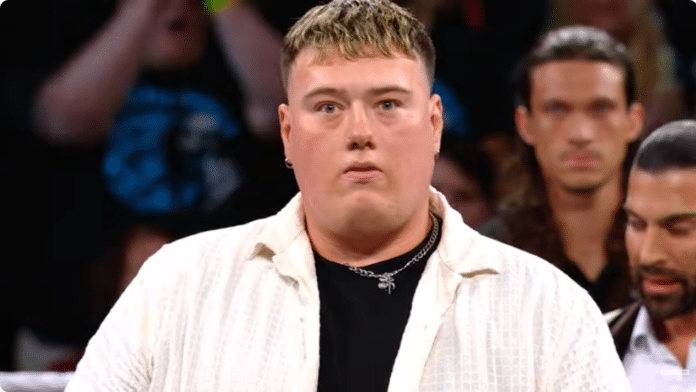
In recent weeks, Mason Rook, the British super heavyweight, has been the subject of discussion after he made a surprise debut on NXT television, attacking the NXT champion, Tony D’Angelo.
The former Will Kroos is known for his agility for someone over 300 LBS and has wrestled for nearly a decade, both in Europe and Japan.
At 29, the newly-named Rook is young enough to be a long-term project for the WWE, but still has a significant level of experience that would suggest that he will be ahead of the curve as far as in-ring progress for a national promotion, especially given the opportunity to work with the world-class trainers in the developmental system.
That being said, most of the WWE fans that watch NXT have already scoffed at his appearance and presentation, and this might be some validity to that.
Don’t get me wrong, pro wrestling should have variety since that’s what allows for more overall depth to the shows. Abdullah The Butcher, Cactus Jack, Yokozuna, The Original Sheik, Kevin Owens, and many others made their mark in the industry specifically because they didn’t look like Hulk Hogan or Lex Luger. The contrast of performers is one of the ways to draw money, what in the wide world of sports is going to happen when Yoko gets in the ring with Hogan? In some ways, it’s the same reason that Andre The Giant or some of the minis have their own place in the conversation of pro wrestling. Part of the allure of larger-than-life personas is that it’s not something that you will see at the grocery store.
However, and this is the biggest problem, at least on the surface, Mason Rook looks a lot closer to a real-life Chris Griffin than Bam Bam Bigelow.
Visually speaking, you can see clones of Rook at a comic convention in line to meet their favorite female wrestler a lot more often than you’re going to see someone like him as an in-ring competitor. Bam Bam had flames tattooed on his head, Cactus looked like a member of the Mansion family in his early days, Ed Farhat looked insane, and Kevin Owens looks like a charismatic brawler that is ready to get into a hockey fight. Rook looks like he plays Call Of Duty online while he sips on Code Red Mountain Dew.
There’s simply nothing that looks fearsome or impressive about him, as far as his on-screen appearance. After the initial attack, Rook talking into the camera was just cringe worthy, and there was a video posted on social media as he made his way backstage where he talked into the camera again, but was completely out of breath by the time he reached the curtain. Granted, he could’ve been winded because he was amped up for the biggest platform of his career on live television, but to the typical WWE viewer, he sounded completely out of shape. The following week, he did a moonsault to the floor from the turnbuckles as a way to showcase some of his unique athleticism. But, the moonsault was sloppy so he looked uncoordinated, not unbelievably agile. Furthermore, his promo wasn’t particularly impressive either, as his accent is so thick that again, it lacked the tone that you’d expect from a monster heel.
At this point, it might sound like I’m trying to throw the British grappler under the bus, but it’s quite the opposite.
I can understand why the causal WWE audience would shake their head at the notion that Rook would be a force in NXT. That’s also why he had more notoriety in Europe and a few tours of Japan, he might not be cut out for WWE TV. Two decades ago, Necro Butcher was one of the most in-demand pro wrestlers on the American independent circuit and worked several tours of Japan, but he definitely wasn’t going to be on national TV with WWE or TNA. The semi-national platform of the independently-owned Ring Of Honor after he had a cameo in the film, “The Wrestler” was his biggest exposure. Obviously, WWE isn’t the only form of success in the sports entertainment industry so he might eventually end up in AEW or TNA instead of the main roster of the WWE. If he develops as a TV performer, it’s more than possible that he can surpass any perceived limitations that the fans might assume he has right now.
In truth, Mason Rook has nothing to lose, specifically because a portion of the audience has already written him off so he’s either going to eventually end up in more or less the same place that he started, or he’s going to proof the naysayers wrong en route to becoming a success story. The problem is, he was brought into NXT to start a feud with the champion so he’s going to have to shift the perception of the audience rather quickly if he’s going to succeed as a new commodity on the brand. He’s not really going to have the benefit of adapting to the WWE playbook over the course of time, he was booked into a position to excel from the start or potentially fizzle out. Furthermore, at his age right now, he might be able to carry the extra weight, but if he wants a long-term career in the WWE he’s going to have to trim down at some point. Bronson Reed is a great example of this, as he trimmed down for his second run in the company and has done the best work of his career. Clearly, the office thinks that Mason Rook has potential or they wouldn’t have booked him in this spot, but I’d still say that it’s going to be an uphill climb for him to get over with the audience.
What do you think? Share your thoughts, opinions, feedback, and anything else that was raised on Twitter @PWMania and Facebook.com/PWMania.
Until next week
-Jim LaMotts
Email [email protected] | You can follow me on Instagram, Facebook, & Threads @jimlamotta89