TKO and the WWE don’t care about you.
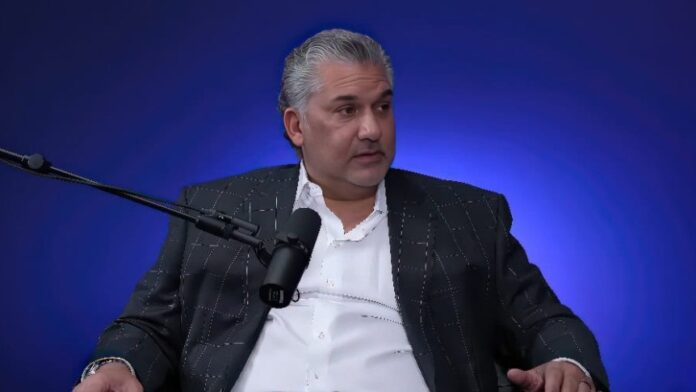
Fightful Select’s Sean Ross Sapp reported on a podcast appearance that WWE President, Nick Khan made on the Sports Business Journal. Khan was quoted as saying,“We will never respond to social media criticism. If ratings are down, if revenue’s down, if relevancy’s down, it’s up to us.”
In some ways, Nick Khan is right, and the reason for it is rather simple. The WWE, especially since the merger with the UFC to form the TKO corporation a few years ago, always looks to target the widest demographic possible in an attempt to draw the biggest audience possible. It might not appeal to the pro wrestling purists that can appreciate the finer points and niche details of the squared circle, but using the lowest common denominator is what makes the WWE product easy to understand for the general public. Vince McMahon, as deviant as he allegedly was in his private life, knew that the sizzle of sports entertainment sold to the casual fan a lot easier than the substance of professional wrestling, hence why he coined the term sports entertainment to separate his product during the national expansion of the 80s from the regional territories of the prior era.
The main difference, at least in terms of the perception of the product under McMahon compared to the conglomerate of today, is that even though McMahon was set on packaging his product as anything but the typical “rasslin'” stereotype, he still paid homage to some of the old school troupes that were established by his father, Vince Sr. under the Capital Wrestling banner. As defiant as some of his booking was during his latter tenure as the boss, Vince knew he had a responsibility to the audience. He might’ve had to fire The Ultimate Warrior after Summer Slam in 1991, but he paid him the amount of cash he demand to get the match in the ring because that’s what was advertised. Vince took bumps and bled when he didn’t have to in an effort to give the fans their money’s worth. Many might question his logic or lack thereof at times, but it’s difficult to question his dedication to the business. He kept prices affordable because he knew that families being able to afford tickets was one of the ways that the sport was passed down through generations and thus kept the fan base strong even during declines in overall business.
On the flip side, TKO looks strictly at the bottom line, and there’s an argument for that, but there’s also a few key counterpoints. Arnold Skaaland and Gorilla Monsoon were kept on the payroll for years because of their original association with the WWWF. The late referee Tim White had an injury cut his in-ring career short, but after years of ensuring smooth travel for his longtime friend, Andre The Giant, the former official was kept with the company in a PR role for years afterwards. Fences were mended with Bruno because he was a mythical figure for generations of fans. The audience can appreciate the acknowledgement of those that sacrificed for the sport and that’s why there’s such an emotional investment involved in professional wrestling.
It’s a harsh reality, even if it’s the right strategy if you keep a strictly business mindset, but TKO doesn’t care about that emotional investment. The suites of Endeavor don’t care that Dynamite Kid put himself in a wheelchair by the age of 40, they don’t care that The Undertaker worked with a broken orbital bone or broken ribs on a European tour, and they don’t care that in the process of the over-the-top spectacle of professional wrestling there can be real-life inspiration that impacts everyone involved. John Cena is a real-life superhero through his efforts as a pro wrestler and understood the responsibility that goes with it. For TKO, it’s stictly business, they don’t care how much the wrestlers of a prior generation sacrificed to pave the way for billion dollar media rights fees of today, or how much effort the current roster puts in to satisfy those contracts for the organization to be able to tout record-setting profits.
The bottom line is, how many fans can they tickets or merchandiser to for events and how much money they can squeeze from the audience in the process.
As mentioned, Nick Khan has a point, while the WWE fan base is on social media, the “internet fans” are a much smaller group. Taking the previous comparison of the casual fan, those that are vocal online are the most dedicated demographic of fans. They don’t just take the time to watch the product when it’s convenient, it’s appointment viewing for them. They don’t just form a detailed opinion on the happenings of a storyline or an event, they take the time and the effort to post about it online. You might think that listening to or serving the most dedicated fans that invest time, effort, and money intro the product would be worthwhile, but that’s not the case, nor should it be. The reason is simple, those fans are going to watch WWE programming regardless so their input on the matter is moot since it doesn’t effect the previously mentioned bottom line.
It might sound unfair, but wrestling fans are going to watch wrestling, and the WWE, perhaps now more than any other time in history, dictates the direction of the business. Sure, All Elite Wrestling made some waves during its initial launch, but have settled into the industry as a rather niche product that pays well. The WWE, through its merger that formed TKO, has enough media muscle and enough cash to decide where the industry goes. A prime example of this is the ESPN deal for the pay-per-views, the fact that WWE talent is regularly featured on the mainstream ESPN networks further reinforces the notion that WWE is the representation of pro wrestling in the United States. Along with that, the purchase of AAA, the expansion of international touring, and the Netflix deal that brings more of the world more access to WWE programming than ever before are steps toward the globalization of the product.
So, no, Nick Khan and TKO don’t care about you. And, no, I’m not calling for a boycott or anything of the sort of WWE, that’s just silly, but it’s rather to answer the question, “why doesn’t the WWE listen to its audience?” The reason is, they don’t have to because those fans will watch anyway, and the scope of the business model is much bigger than the most diehard demographic. Keep in mind, for every smart mark online that argues about how many stars a match did or didn’t get, there are expotentially more fans that will pay insane ticket prices to set front row at a WWE pay-per-view. The most dedicated fans don’t impact the revenue streams, which is why it’s more much important for the publicly-traded corporation to serve its stockholders and cater to the casual fan that might see a wrestler on ESPN.
Furthermore, when you take into account that the WWE can tout record-setting profits the past several years through its various media rights deal, why should they change anything? It can be debated if the WWE utilizes its current roster to its full potential, or if the product is truly as good as it can be, but there’s no doubt that there’s depth to the roster, both from an in-ring and star power prospective. When WWE has the biggest stars in the industry and they are making record-setting money, there’s no reason they should listen to the smart mark online that’s going to watch anyway. If the TKO business model eventually erodes the fan base over the course of time is a completely different discussion, but for right now, there’s no reason for the WWE to change its philosophy for the product.
Until next week
-Jim LaMotta
Email [email protected] | You can follow me on Instagram, Facebook, & Threads @jimlamotta89