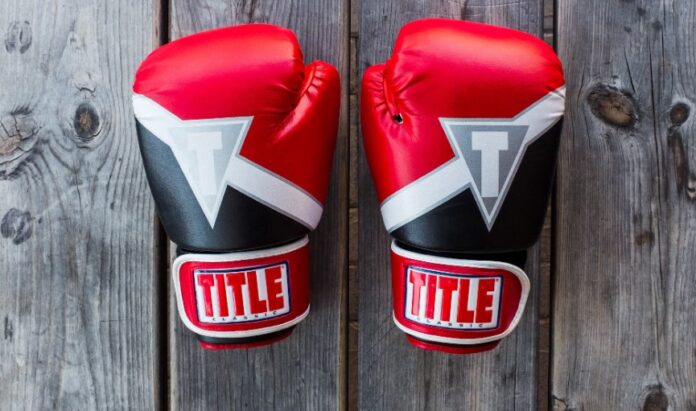
Could professional boxing have an opportunity to re-establish itself in the United States?
Stretching as far back as the closed-circuit, the predecessor to pay-per-view that was instrumental in the national expansion of pro wrestling years later, era of the sweet science, boxing had a way to monetize itself on a major scale. Basically, the sport was on the forefront of mass distribution, regardless of what the form of media was at the time. The Rumble in The Jungle saw fans flock to those previously mentioned closed-circuit location. When HBO launched as a form of premium television when basic cable was still in its formative stages, the ability to watch live boxing cards, along with movies that had recent theatrical runs, was one of the main selling points for consumers to pay a little extra. As time went on, Mike Tyson became a pay-per-view exclusive, but there was still a portion of his prime that aired on the subscription networks. The same can be said for some of the biggest names in the sport. Furthermore, when technology advanced to the point that customers could order the events directly at home, boxing often generated a few million buys a year between the handful of major bouts that were broadcasted. Oscar De La Hoya, Evander Holyfield, and Lennox Lewis generated four million buys between four pay-per-views that were held in 1999.
As we know, the political red tape, especially as networks expanded and there was more money on the table, almost completely destroyed the sport. For decades, the top fighters clashed in classic battles that made the sport not only as popular as it was, but a part of pop culture in America at different points in time. In the late-90s, there were almost weekly cards on HBO, and ESPN had the Friday Nights series to showcase the up-and-coming fighters as well. The cards every few weeks on the linear HBO channel were used to promote signature pay-per-view events, and it kept the business model strong. At the same time, legendary slug fests such as the Gatti-Ward trilogy maintained the selling point for the subscription channel itself, along with newer dramas like The Sopranos and The Wire.
The bottom line is, when the top fighters competed against each other, the industry of boxing was much healthier. By the mid-2000s, that changed and it became more about promoters that wanted to protect their golden goose rather than draw the biggest money possible. Floyd Mayweather, a masterful defensive technician, was in position to be the top name in the sport, specially after the peak heavyweights of the late-90s had retired, and he secured a career-defining win against the previously mentioned De La Hoya in 2007.
Unfortunately, Floyd became more about protecting his brand than fighting the best competition possible. He fought a 23-year-old Canelo Alvarez before the Mexican superstar had the experience to truly be a threat to his unblemished record. Neither Victor Ortiz nor Robert Guerrero had any business being in the ring with Mayweather, and the same could be said for Andre Berto later in Floyd’s career. Marcos Maidana was competitive against him, which was proven by the debatable split decision that Floyd won on the score cards before he won a unanimous decision in the rematch. Essentially, Mayweather’s career devolved into glorified exhibitions, Showtime actually lost money on the contract that he had with the network when buy rates didn’t cover his hefty guarantee. He strategically fought a diminished Manny Pacquiao five years too late, and the super fight that the public waited years to see was woefully underwhelming. HBO and Showtime, networks that were major distribution channels for the sport, got out of the boxing business almost decade ago when the economics were no longer profitable for their platforms.
Floyd vs. Conor McGregor was the last money grab of Mayweather’s pro boxing career, setting a pay-per-view record for the novelty alone, but the one-sided bout wasn’t sold on the competition.
In the past decade, the previously mentioned Canelo Alvarez, Terrence Crawford, Gennady Golovkin, Tyson Fury, Vasiliy Lomachenko, and a few others provided boxing fans with quality performances, particularly when Alvarez made Cinco De Mayo and Mexican independent day weekends staples of the calendar. However, the majority of those contest didn’t capture the attention of the general public, as casual sports fans didn’t have boxing on the radar. It didn’t help the situation when Saudi Arabia offered expotentially more money, including $100 million per fight to get Alvarez to compete in the country, than other promoters could realistically offer so marquee bouts were held in the middle of the afternoon in the United States without major fanfare.
Without those fights in a primetime spot or the mainstream distribution to make it easily accessible to the general public, the results of major fights become a note online or blurb on Sports Center rather than something sports fans tuned in for. The attention turned to sideshow fights like when the 60-year-old Mike Tyson fought Jake Paul that drew such a massive number that it crashed Netflix. Jake Paul’s lack of credibility as a pro boxer was exposed when he lost to the mediocre Tommy Fury in 2023, and when Anthony Joshua broke his jaw when he knocked him out in the sixth round last December.
I have my doubts, mostly because of the track record that boxing has of self-sabotage for the vast majority of the past 15 years, but a few of the recent cards, and more specifically the potentially of the deals put in place, might be a way for the sport to rebuild itself, at least to some degree among the American market. In July, TNT and DAZN formed a partnership to bring “The Fight” series to both the streaming platform and the linear cable channel, with the concept of monthly fight cards. The debut card, Abdullah Mason vs. Albert Bell, which isn’t exactly a match-up with major star power, still drew a reported average of 750,000 viewers. Last week, Andy Ruiz, the heavyweight that gained brief fame for his surprising knockout victory against the previously mentioned Anthony Joshua in 2019, lost a unanimous decision to Damian Knyba for a contest that garnered 678,000 viewers.
Clearly, there’s an audience for boxing when fights are accessible and affordable.
UFC boss, Dana White was a longtime critic of the boxing industry, mostly because of the political nature of the sport.He formed Zuffa boxing with the Saudi government, with the most important piece of that puzzle being the cash that the Saudis can afford fighters. The organization started running monthly cards last year, with Canelo vs. Crawford under the Zuffa banner. Last night, Ryan Garcia pummeled Conor Benn, prompting the referee to stop the bout in the second round. It remains to be seen how impactful the Zuffa project will be on a long-term basis, but the fact that the cards are included in the $7.99 Paramount+ subscription.
Again, the fights are easy to find and don’t have the outrageous price of traditional pay-per-view.
With the pending merger between Paramount and Warner Brothers Discovery, it’s possible that all of this could end up under the Zuffa banner, but the point is. there are two entities are currently running live monthly cards, which gives fighters a chance to make a name for themselves and thus become stars in the process. As I said, I really doubt that boxing will avoid the pitfalls that originally diminished the sport, but between the TNT and Zuffa deals, this is the best chance that boxing had to rejuvenate itself in years.
Until next week
-Jim LaMotta
Email [email protected] | You can follow me on Instagram, Facebook, & Threads @jimlamotta89