The annual purge of talent from the WWE roster is usually around Wrestlemania each year, prompting some discussion about where performers will go next, who was underutilized, etc. But, as we’ve seen since the WWE merger with the Ultimate Fighting Championship to form the TKO corporation a few years ago, the conglomerate takes a much more direct approach to its talent relations.
Cutting talent is unfortunate and disheartening, it’s tough to see anyone lose their job, especially their dream job in many cases, but it’s a harsh reality of the business side of the genre. The name of the game is to develop and promote talent that can draw money on the biggest scale possible. There are a lot of boxes for potential WWE superstars to check, many of them that extend beyond just the in-ring skills, which is why the money-drawing stars in the largest sports entertainment company in the world are a rare breed. Some of that has to do with the modern philosophy of promoting the brand ahead of any individual star, which gives the organization more of a margin for error, so to speak, if any injury that might put a main event name on the shelf, or if there’s a contract depute that would take the talent off the roster until a resolution was agreed upon. The other side of the coin is that the specific performers aren’t over as much as the previous generation when the focus was on those individual stars rather than the initials. Steve Austin, The Rock, and Mick Foley were over bigger in their heyday individually than the WWE is today, in terms of pop culture popularity, partially because they were given the spotlight, not the initials. Sure, each of those guys represented the WWF brand, but a lot more Austin 3:16 t-shirts were sold than the standard WWF logo t-shirts. It’s a lot easier for the audience to emotionally invest into the character than the corporation, and that’s taking nothing away from the massive success that the WWE has become as far as being a global, publicly-traded organization.
Still, even taking that equation into account, the amount of talent that can excel in the top positions where the big money is made, is a select group of high-level performers. As of today, there are only a handful of names that can truly move the needle, especially since the retirement of a slew of legends in recent years. In fact, you could say that WWE was able to ride the wave of the John Cena retirement tour to still draw major crowds last year when the rest of the product probably didn’t justify it. Cody Rhodes, Roman Reigns, CM Punk, and Rhea Ripley are on the short list of WWE stars that the general public will take notice of these days. That’s not to discount any other extremely talented performers on the roster, but rather to point out how exclusive the top-tier is.
They have to be able to go in the ring, they have to be able to cut the promos to sell the pay-per-views, they have to do the media rounds to keep the sponsors satisfied, they have to be able to sell merchandise, and they have to be able to avoid the countless pitfalls of the modern age of technology when everyone has a smart phone to be able to record almost everything, particularly on social media.
There are also the countless wrestlers that get shuffled through the Performance Center, and if the program has a 10% success rate based on the number of athletes they sign to a relatively cheap developmental deal, the investment is more than worth it. When you have that many prospects coming through the doors, it’s an easy decision to release a few that may or may not be progressing at a fast enough rate since those cuts make room for new prospects.
That’s why even though the WWE had its extended list of releases a few months ago, it’s not too surprising that ten wrestlers were cut, according to a report from Fightful Select.
Adriana Rizzo, Wendy Choo, Anya Rune, Zena Sterling, Braxton Cole, Marcus Brown, Gary Wilson, Jasper Troy, PJ Vasa, and Ellen Akesson were all given their walking papers.
The majority of this list is cannon fodder, not to say that they don’t have a future, but rather that their status among the landscape in WWE, or even just the developmental system is moot. For example, Marcus Brown and Ellen Akesson were recruits from the bodybuilding world that were inked to contracts in March, but never actually had a match. In this case, they were prospects with an athletic background that probably couldn’t make the transition to sports entertainment. The totality of the investment is minimal and their relatively quick exits clears space for the next group of prospects that might make a better transition to the squared circle. Gary Wilson was a referee that spent four years under contract, and it might’ve been a situation where there just wasn’t an open spot for him further up the ladder. Braxton Cole, Anya Rune, PJ Vasa were all signed within the past year and competed on Evolve. This is where the impact of most of these cuts is more or less zero because the developmental brand within the developmental system is more about the analysis of progress for the talent rather than any type of star power or cache as a commodity. The Evolve brand is basically there to give prospects some type of in-house television exposure so to speak before they would be considered for actual television exposure on the NXT brand on the CW. The reason being that Tubi is under the radar enough that rookie mistakes won’t be exposed enough to sour the audience on a wrestler that is still getting experience, but it’s enough of a WWE style production that the performers can learn how to work a WWE television environment.
Adriana Rizzo worked primarily as an interviewer on the Evolve show, and this might be a situation similar to Gary Wilson, maybe they just didn’t have a spot for her further up the ladder in the system. Zena Sterling was a part of the LFG series, and despite the television exposure, the viewership was minimal so the impact of her release is as well. Jasper Troy was the winner of a season of LFG and had a stint as the WWE Speed champion, but again, the viewership was so minimal on anything that he was involved in so the vast majority of the WWE audience, including fans of the developmental brands, probably don’t know who he is.
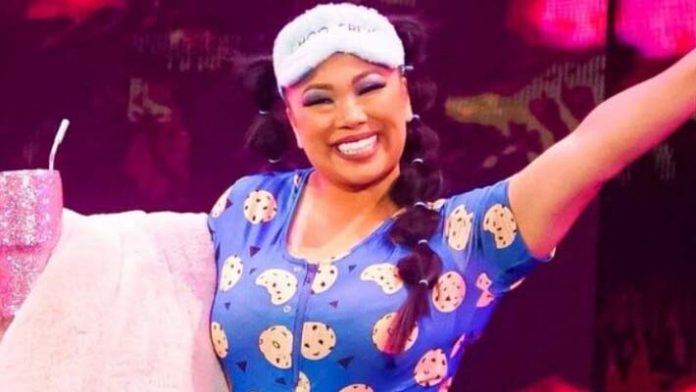
The biggest release from the list might be Wendy Choo, who originally signed a developmental deal in 2019, but had spent a few years on the sidelines after a serious ankle injury that required surgery. Choo had been enough of a part of the NXT brand in various roles that she had an action figured released by Mattel that sold very well, including a chase variant. The others on this list weren’t far enough along to get merchandise, which is one of the reasons that I’d say that Choo was the biggest cut, as she had proven to be at least somewhat marketable, albeit for a smaller sample size. I think it goes without saying that Choo is going to get offers going forward, and TNA is probably where she ends up since it’s a more natural transition since there’s a working agreement between the two organizations, allowing the door to be open for an eventual NXT return.
As mentioned, it’s tough when people lose their jobs, but in some ways, this could allow the talent cut from the roster to use the experience they gained in the developmental system to be make to still make a better first impression than they would’ve other wise since the majority of fans still don’t know who most of them are. Getting cutting from the WWE isn’t the end of a career, Drew McIntyre is a great example of that, but this scenario shows just how much of a machine the TKO corporation is because they can cut ten performers from the list and still have a full roster since it’s just another day at the office.
Until next week
-Jim LaMotta
Email [email protected] | You can follow me on Instagram, Facebook, & Threads @jimlamotta89