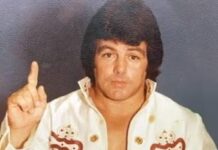
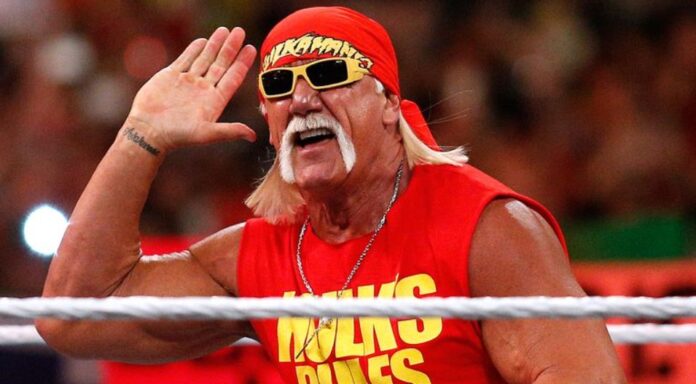
The anticipated four-part documentary series on Netflix titled, “Real American” that chronicled the career, as well as featured the final interview of Hulk Hogan’s life, premiered on the streaming platform today. Given that WWE, including Lee Fitting, current WWE executive producer, and Triple H, were involved in the project, I was skeptical about what narrative the production was going to try to present, especially with the theoretical value of the Hogan brand at this point.
First, it should be noted that I don’t think this documentary needed four episodes, which isn’t a knock on Hulk, but rather the tendency for content providers to stretch subject matter simply to extend the runtime as much as possible because of how much of a premium is placed on original content within the media landscaped, as each platform tries to maintain subscribers over the long haul. That being said, this production did very well of telling the story of the life of Terry Bollea, and the career of Hulk Hogan without regurgitating used footage or a carbon copy of stories that were already covered ad nauseam. That was one of the glaring issues of the long-form Vince McMahon documentary that was produced by Netflix in September of 2024. The six-episode presentation was essentially a retelling of WWE history rather than an examination of the life of the kingpin of sports entertainment, with only a few blurbs that gave an insight into the mind of McMahon, despite the five hours of footage that made the cut for the documentary.
Thankfully, this Hogan presentation gave new information, and covered most of the important points of his career without getting too deep into the weeds with topics that are cliches in 2026.
One of the most interesting portions was in the first episode when Bollea revealed details about his family background, including the lack of apparent affection from his parents. His ex-wife, Linda claimed that Bollea was an unplanned child, leading to a lack of compassion during his childhood. I’m not Sigmund Freud, but maybe this early lack of acceptance led to Terry Bollea’s insecurities later in life? The segment provides at least a possible peak into the mindset of why a guy that was a cemented star still had to insist that he beat everyone without rarely putting anyone else over. On the other end of the spectrum, Brock Lesnar is an example of a guy that was always willing to do business and was confident enough that he knew his star power wouldn’t fade. At the same time, it might be a scenario that isn’t anywhere near as provocative as some deep-seeded search for acceptance based on experience earlier in life. It could’ve just as easily been a situation where Hulk was an egomaniac that was from an era that he learned to get over at all costs, even the existence of the promotion. Still, the potential explanation was very interesting, as it was a look at the man behind the sports entertainment persona.
Along the same lines, while it was briefly mentioned previously that Bollea had a brother that was a biker, this documentary reveals that Allan Bollea was estranged from the family for a portion of years before he reconnected with Hogan prior to his death via an overdose when Hulk was on the road with the WWF. Hogan was visibly shaken when he discussed the death of his brother. It didn’t take much to figure out long before this documentary was produced that Linda Hogan is nothing more than a useless gold digger that wanted a complimentary trip on easy street in her life, and this feature proves it. In fact, she talks about her insistence that she be taken care of, which is what prompted Bollea to originally propose to her in the 80s. Furthermore, most of the home movie footage that was shown was of Linda talking about the expensive things that were purchased or the lavish home that the family lived in at the time. There will be viewers that watch this presentation that will want to claim that is somehow absolves Hulk Hogan of his sins because Terry Bollea tries to separate himself from the on-screen character, as if his complicated life shouldn’t have an impact on the perception of the legacy of Hulk Hogan, but that seems like a flimsy excuse to avoid responsibility for the rightfully criticism during his career. That being said, nobody will defend Linda, especially after the statements she made on Netflix. Plus, she looks like she had more botox in her face than the amount of juice that The Hulkster ever did during career.
As the series progresses, the documentary offers the broad strokes of his wrestling career, which was the right decision when you take into account how extensive the details of each of his runs were over the course of different tenures in either WWF or WCW. This gave enough detail about the peaks and valleys of what worked and what didn’t for the average person to get the point without getting too granular with details that the causal fan wouldn’t connect with in terms of what they think of when it comes to the Hogan legacy. As much as I’m not a fan of Hulk Hogan the character or Terry Bollea the person, I can honestly say that I think it was truly critical to include the criticism from others in the business when this feature covered his wrestling career.
If the purpose of this documentary was to reshape Hulk’s image, and in many ways that looks to be the objective, it was key to include the good, the bad, and the ugly as a way to give the audience a full picture of Terry Bollea. Hulk Hogan wasn’t completely good, but with giving the whole story, or at least as close to it as possible, it allows for the notion to be considered that Hulk wasn’t all bad either. Yes, Bret Hart had a point that Hulk shouldn’t have taken the title back at Wrestlemania 9, and yes, David Shoemaker had a point that it appeared that Hogan was trying to cling to being relevant in 1993, but the full scope allows the audience to see how Bollea evolved over time. On the other side of the coin, the impact of Hulkamania in the 80s and then the NWO a decade later can’t be denied. The sincerity of Hulk Hogan or Terry Bollea will probably always be debated, but I don’t think anyone is going to question his impact on the industry.
It also must be taken into account that some specific details were either glossy over or excluded, which was probably by design to soften Hulk’s image. For example, when Hulk’s run in the early-2000s was reviwed, his incredible match with The Rock was highlighted, but his rocky exit in 2003 when he couldn’t agree on a creative direction was skipped over. When it was mentioned that Shawn Michaels intentionally over sold during their 2005 bout, nobody said anything about the notion that Hulk only agreed to the match if he was going to win. Furthermore, while his 2006 match with Randy Orton was featured, it was conveniently forgotten that in the build up to the Summer Slam bout that Hulk claimed to have a knee injury until the finish was changed so he could beat the younger star. In the same way, the sex tape leak and the racist remarks he made were reviewed, but the segment was kept relatively short, and there weren’t any direct quotes of what he actually said.
The bottom line is, the accomplishments of the Hulk Hogan character don’t give Terry Bollea a pass for the ignore, racist remarks that he made during a difficult time in his life. Again, that’s not to say that Bollea is just a terrible person or that he didn’t learn from the mistakes, but claiming that the character and the real-life person should be totally different isn’t an excuse. Terry Bollea cashed a lot of real checks based on the scripting of the hero as the Hulk Hogan character. More specifically, pro wrestlers aren’t actors, and it might not be fair, but when you agree to work as the character of the American hero and enjoy the perks that go along with it, there’s a responsibility of the real-life representation. Don’t get me wrong, the fact that The Hulkster was a hero to those that needed it and that the impact of the character was overwhelmingly positive are truly good things, but that doesn’t take away from the fact that the racist controversy also had a real-life impact.
The biggest issue of why the criticism hung over Bollea’s head is that he tried to move past the entire debacle rather than ever truly address it, and even in the documentary, at least from what was shown, he tried to take a very quick approach to the comments he made about that time in his life. It’s disappointing, but much like his sincerity will be debated, there probably won’t ever be a definitive answer about how Terry Bollea truly felt about the remarks that he made. Maybe he was truly sorry, it’s definitely possible, but given his extensive track record for ludicrous claims, such as working 400 days a year, almost everything he said has to be taken with a grain of salt, which is very unfortunate. There will probably always be a portion of Hulk’s legacy that will be seen as unresolved.
It was almost depressing to hear the details of Bollea being broke after his divorce and how it forced him back into the ring when his body was clearly in shambles. It was shocking to hear how much fentanyl Hulk claims that he had to take at one point to deal with the amount of pain he was in when he wrestled during the ill-fated TNA run. Keep in mind, Hulk Hogan made millions of dollars a year for several years prior to that, but still ended up with nothing so he basically had to start over when he signed with TNA.
His endorsement of Donald Trump was covered, and surprisingly, the orange blob even did an interview for the documentary. I found it very pretentious for Bollea to say that he doesn’t agree with everything Trump says, but was then shown in a clip at the Republican National Convention, claiming that Trump was his hero. It goes without saying that picking a side with politics, which are more of a work than pro wrestling, will divide the audience. At the same time, Hogan is a smart businessman, and politics can be very profitable, which is why he launched Real American Beer to target the MAGA base.
There are numerous reasons to criticize Hulk Hogan. The fact that he was an egomaniac in the pro wrestling business, the real-life racist comments that he made, or the representation of his political endorsement.
However, the portion of the final episode that discusses his sudden passing last year was unbelievable sad. Jimmy Hart is an absolute gem, and seeing him cry at the lost of his best friend is heart-wrenching. The same can be said for Hogan’s friends like Eric Bischoff and Jim Duggan. The public image is well-known, both positive and negative, but the one thing is for sure, Terry Bollea had a very close impact on his friends. In the same way, Hulk had a very personal impact on the fans that he inspired. That might be the biggest takeaway from the entire Netflix documentary, it covered both sides of the coin so it’s mostly going to depend on the perspective of the viewer to determine the narrative of Hulk Hogan’s legacy. Was he a super hero or a fraud? It goes without saying that the life of Terry Bollea and the legacy of Hulk Hogan are very complicated. Considering how complicated life can be for anyone, maybe the best thing that can be said is that it was undoubtedly a positive aspect that the Hulk Hogan character had a positive impact on many of the fans of his the heyday of his career.
What do you think? Share your thoughts, opinions, feedback, and anything else that was raised on Twitter @PWMania and Facebook.com/PWMania.
Until next week
-Jim LaMotta
Email [email protected] | You can follow me on Instagram, Facebook, & Threads @jimlamotta89