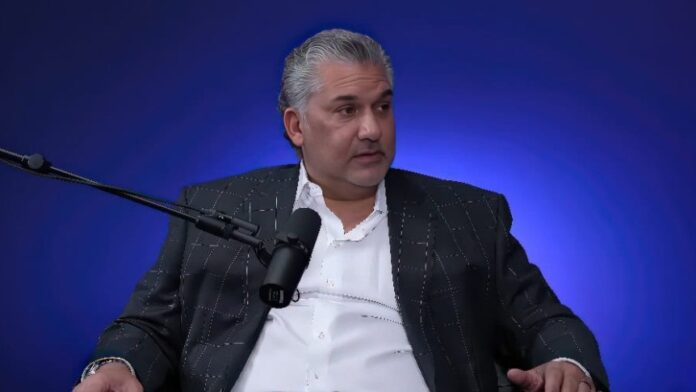
Nick Khan has made it clear that WWE does not alter its creative direction simply because of fan criticism on social media.
Speaking with Sports Business Journal, Khan was asked what level of backlash would cause WWE to rethink its plans. His answer was direct. “We will never respond to social media criticism.”
Instead, Khan said WWE focuses on business indicators rather than online reactions. “If ratings are down, if revenue is down, if relevancy is down, it’s up to us.”
The comments provide insight into how WWE’s leadership views fan feedback in the modern era. While social media discussion is monitored, Khan indicated that the company evaluates success through measurable business performance rather than trending hashtags or online campaigns.
Khan also revealed that he, Paul Levesque, and Shawn Michaels held discussions roughly a year ago about the need to accelerate WWE’s next generation of talent.
The concern stemmed from the fact that many of WWE’s biggest stars are now veterans.
Khan specifically cited: John Cena, Dwayne Johnson, and CM Punk.
As WWE looked ahead, Michaels reportedly suggested increasing live-event opportunities for developmental talent.
According to Khan, Michaels believed young wrestlers needed more experience performing in front of real audiences. “We need to take them on the road so they get the crowd response of a live crowd.”
Khan emphasized that crowd reactions remain one of wrestling’s most valuable developmental tools. “If you’re getting cheered, great. If you’re getting booed, great. If there’s no response, that’s terrible.”
That philosophy aligns with WWE’s recent decision to expand house shows and touring opportunities for emerging talent from WWE NXT.
Khan also addressed one of the biggest fan debates of recent years: whether WWE changed course on the road to WrestleMania 40 due to fan backlash.
Following the announcement that The Rock would be involved in the WrestleMania main-event storyline, many fans believed WWE altered its plans after the “We Want Cody” movement gained momentum online.
Khan strongly rejected that narrative. “The plan was always how it ended up in Philly two years ago.”
According to Khan, WWE intentionally allowed speculation to build while sticking with its original direction. “You want to throw the fans off, you want to let things bake, and then boom — it ends up the way that we wanted it to end up.”
He added: “It never changed. That was just online rumors and gossip that we were changing it. It never changed.”
Khan also praised The Rock’s contribution to the storyline and noted that bringing him back was a significant achievement for the company.
The biggest takeaway from Khan’s interview is that WWE’s leadership views business performance—not social media sentiment—as the ultimate measure of success.
While fan reactions remain important, particularly in live arenas, Khan’s comments suggest that WWE is unlikely to abandon long-term creative plans simply because they become unpopular online.
Instead, the company appears focused on:
Growing ratings and revenue
Building the next generation of stars
Using live audience reactions as a developmental tool
Maintaining long-term storytelling plans despite online criticism
Whether fans agree with that philosophy or not, Khan’s comments offer one of the clearest explanations yet of how WWE evaluates creative decisions behind the scenes.