Pro Wrestling Press sent along the following:
David Otunga Sets the Record Straight on Long-Standing WrestleMania Rumors Involving Jennifer Hudson
LOS ANGELES, CA – For over a decade, rumors have swirled within the pro wrestling community regarding the “real” reason behind David Otunga’s tenure in WWE. Specifically, speculation suggested that Otunga’s decade-long run was a strategic move by Vince McMahon to eventually secure Academy Award winner Jennifer Hudson for a WrestleMania musical performance.
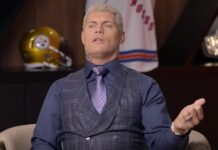
In a definitive new video, the former Nexus member and multi-time Tag Team Champion finally addresses these claims, revealing the truth behind the negotiations and why Hudson never took the WrestleMania stage.
Protecting the Brand Otunga confirms that the interest from WWE was real and immediate. Internal documents reveal that as early as February 2009—while Otunga was still developing in FCW—WWE reached out to Hudson’s team to perform “America the Beautiful” at WrestleMania 25.
However, it was Otunga himself who halted the deal.
“I told them no,” Otunga says, citing a desire to keep their professional worlds separate until the timing was right for his own career. “I work here now. I’m a WWE superstar… Why would she sing at WrestleMania before I’m even a part of it? I told them to wait until I am in the main event.”
The “Salty” Reality of WrestleMania 26 The press release notes that when the couple declined the invitation for a second year in a row, WWE eventually booked Hudson’s American Idol rival, Fantasia Barrino, for the spot at WrestleMania 26.
Otunga suggests that the booking of Fantasia may have been a reactionary “salty” move by WWE underlings. Despite the perceived slight, the couple attended the event as a family, though the friction contributed to Hudson’s decision to never return to the event in a professional capacity.
More Than a Bargaining Chip Addressing the “10-year rumor” directly, Otunga highlights that his longevity in the company was built on mutual respect and his own evolution from a performer to a legal analyst and commentator. He notes that Vince McMahon personally “admired” his stance on protecting his fiancée’s brand, rather than resenting it.
Otunga’s account effectively deconstructs the narrative that he was merely a conduit for celebrity booking, proving that his career was defined by personal conviction and a refusal to use his high-profile relationship as a shortcut to the main event.