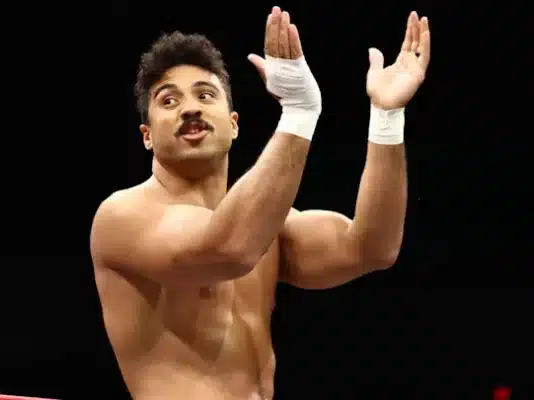

Former WWE Champion Jinder Mahal believes Netflix’s WWE: Unreal series represents a positive step forward for the professional wrestling industry, despite criticism from some fans who feel the show reveals too much about the business.
Speaking on Busted Open Radio, Mahal—who now wrestles under his real name, Raj Dhesi—shared his thoughts on the series and explained why he feels modern wrestling storytelling benefits from incorporating real-life elements.
“The way that I see the business going, and even what it is today, the best storylines are blending what’s happening—or what has happened—in your real life and bringing that somehow on screen.”
According to Dhesi, wrestling has increasingly moved toward stories that blur the lines between reality and fiction, making behind-the-scenes content more valuable than ever.
“That’s why I really believe Unreal is such a great tool to move the business forward.”
Since its release, WWE: Unreal has generated significant discussion among fans. While many have praised the behind-the-scenes access it provides, others have questioned whether pulling back the curtain too far could diminish the magic of professional wrestling.
Dhesi acknowledged those concerns but argued that the industry has long since evolved beyond the era when fans were expected to believe everything they saw on television was completely authentic.
“Now, I know everybody has their opinion on it. Some people disagree, like, ‘Why are we pulling the curtain back and exposing the business?’ The business has been exposed. It’s fine. We all know what it is. It’s an art form as well. It’s the intersection of art and sports. It’s the perfect intersection.”
He also believes the series provides a unique opportunity for wrestlers to connect with viewers on a more personal level by showcasing real-life challenges and experiences that can later be incorporated into television storylines.
“Through that show, you can share struggles, really build that personal connection, and bring those into storylines.”
Dhesi even suggested that WWE: Unreal could become a storytelling device in its own right, with WWE potentially planting narrative seeds within the documentary-style series that later pay off on Raw, SmackDown, or Premium Live Events.
“Or maybe you plant a storyline within Unreal. Everything is a work anyway. You plant something in Unreal and then bring it into Raw, and then it moves the needle forward.”
As wrestling continues to embrace reality-based storytelling and behind-the-scenes content, Dhesi believes projects like WWE: Unreal can help strengthen fan engagement rather than hurt it. In his view, the lines between reality and storyline are already blurred, making the series another tool WWE can use to create compelling narratives and deepen audience investment.