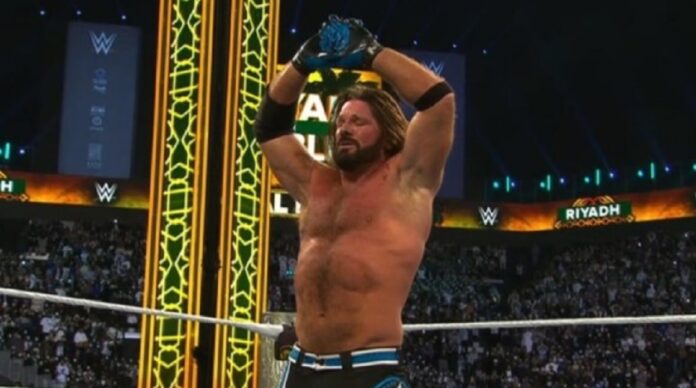
WWE Hall of Famer AJ Styles recently shared his perspective on how booking decisions affect performers who are not featured as the focal point of a storyline.
Speaking on his podcast, Styles was asked how wins and losses impact him when he is not directly involved in a major angle. According to Styles, the answer often comes down to understanding a wrestler’s role within the larger story being told.
“If you’re not the story, sometimes you’re not the story in the match. You’re just in the match. And to tell you the truth, you probably wouldn’t remember whether it was a win or a loss unless somebody went through and wrote it all down because it’s not that important. Guys win and lose all the time.”
Styles went on to explain that, in his view, the outcome of a match is far less important than how it serves the overall narrative.
“So, it’s best served where it’s at in the story. That’s what means the most to me. I could care less about wins and losses. They don’t mean anything. This is a show. This is pure entertainment. This isn’t the UFC. That’s the biggest difference.”
The former WWE Champion also reflected on how his mindset evolved as he progressed through his career, particularly after reaching veteran status within the company.
“Definitely, the older I got, my job wasn’t to be the heavyweight champion of the world. Some people want that. Some people need that. I didn’t. My job was to make sure I got the younger talent over as well, if I could. And if they were older, who cares? I had a job to do.”
Styles added that he never felt the need to challenge creative decisions unless he genuinely believed he had a better alternative.
“Unless I had a better idea of how to do it, then there’s no point in saying anything. Do your job. I’m not as concerned about that as much as the fans were.”
Throughout his WWE career, Styles established himself as one of the company’s most accomplished performers, capturing multiple world championships and headlining some of the biggest events in the industry. However, his comments suggest that his priorities shifted over time, with helping elevate talent and contributing to the overall product becoming more important than individual accolades.
Styles’ remarks also offer insight into how many veteran performers view professional wrestling differently from fans, placing greater emphasis on storytelling and long-term character development than on simple win-loss records.