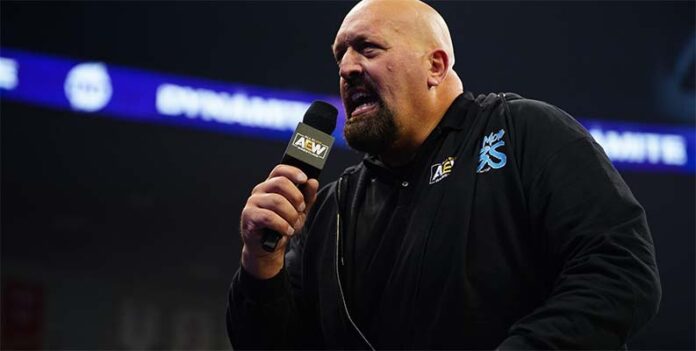
Paul Wight has revealed the seemingly small interaction with Vince McMahon that convinced him his days as an active WWE performer were coming to an end.
During an appearance on TMZ’s Inside The Ring podcast, the former Big Show reflected on his lengthy relationship with McMahon and the pressure that accompanied spending decades as a featured WWE talent.
While acknowledging that McMahon could be difficult to work for, Wight stressed that he remains grateful for the career and opportunities he received. “Some of the sh*t he did was pretty mean. At the same time, do I have anything to complain about? No. I had a great career. I did a lot of things. I worked with some of the greatest people, the greatest talents that have ever been in this business.”
Despite his longevity and accomplishments, Wight said he never felt comfortable assuming his position in WWE was secure. He understood that his place on the roster depended on continuing to provide value to the company. “But I never for once laid back on my ass and thought that I had it made. No, there was a lot of anxiety and a lot of stress daily, making sure I knew I was only going to be there as long as I was valuable, as long as I produced. And when I stopped producing, I wasn’t going to be there anymore because that’s the role that he saw me in.”
According to Wight, the moment he realized his WWE career was approaching its conclusion came during the COVID era — and it happened when McMahon referred to him by his real first name. “And I’ll tell you when I knew I was done with WWE: Vince called me ‘Paul’ one day during the COVID era.”
Wight explained that throughout their many years working together, McMahon had always addressed him by his wrestling name or a variation of it. “In all the years that I knew Vince McMahon, he never called me Paul. He always called me Show or Big Show. He never called me Paul.”
That change immediately stood out to Wight. He recalled the moment occurring around the time of his program with Randy Orton, when McMahon suggested that “Paul” could conduct an interview.
For Wight, the wording signaled that McMahon no longer viewed him primarily as an active in-ring performer. “And we were doing something. I think it was maybe during the Randy Orton angle or something like that. They said, ‘Well, Paul can do an interview here.’ And in my brain, I died a little bit in my soul because I knew my opportunities to compete in the ring were pretty much done because Vince didn’t see me as a talent anymore. Vince was going to start moving me into, like, ambassador roles and all these things that, at the time, I didn’t want to be a part of.”
Wight emphasized that he did not view the situation as McMahon treating him maliciously. WWE had a role available for him as he transitioned away from regular competition, but Wight simply was not ready to make that transition. “So that was a lot of my decision of knowing and being around him long enough. And there was nothing mean or malicious about it. You know, I could have rolled into that nice role at the time. I wasn’t ready to give up competing.”
That realization ultimately played a significant role in Wight’s decision to leave WWE and join AEW, where he believed there would still be opportunities to contribute while remaining connected to the in-ring side of professional wrestling.
Wight also acknowledged the extensive physical issues he has dealt with in recent years, including knee and hip replacements. He joked that, given those setbacks, he might not have shown himself the same patience AEW President Tony Khan has. “And that’s where I went to Tony Khan. And yeah, sure, I’ve had knee replacements, hip replacements, and I’ve been through hell the past six years. I would have fired me three years ago, if you want to be honest about it. But Tony Khan still sees value in me and sees value that I can give to younger talent.”
Wight left WWE in 2021 after more than two decades with the company and subsequently signed with AEW. Although his physical issues have limited his ability to wrestle regularly, Wight’s comments make clear that his departure from WWE was driven in part by his desire to remain involved as a performer rather than immediately transition into an ambassador role.
For Wight, McMahon simply calling him “Paul” was enough to tell him that WWE’s perception of his role had changed — and that it was time to begin the next chapter of his career.