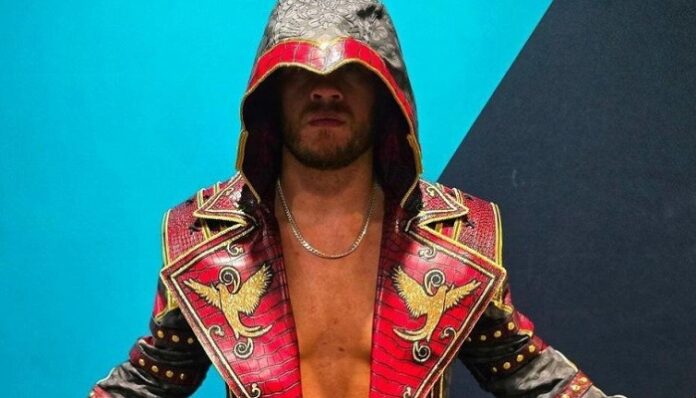
WWE Hall of Famer Eric Bischoff had plenty of praise for the presentation of AEW All In: London 2026, but he was far less impressed by the wrestling itself — particularly the World Championship main event between Will Ospreay and Kenny Omega.
Speaking with Conrad Thompson during a live edition of 83 Weeks shortly after the Wembley Stadium event, Bischoff gave his reaction to Ospreay defeating Omega in a bloody 34-minute main event to capture the AEW World Championship in front of his home-country crowd.
When Thompson brought up the contrast between Omega’s acclaimed technical matches with Kazuchika Okada in New Japan Pro Wrestling and the more violent style presented at Wembley, Bischoff compared the All In main event to watching The Nasty Boys. “I didn’t like the match at all, and I know people are going to say Bischoff’s such a hater,” Bischoff said. “Look, for those who like the AEW style of wrestling, it was fine. You got what you wanted. You got what you paid for, and it met or exceeded your expectations, and I’m happy for you. For me personally, subjectively, based on what I enjoy out of professional wrestling, it was like watching a Nasty Boys match. It was a hardcore, slow-paced match. And yes, it was bloody, and there were great spots.”
Bischoff’s criticism wasn’t limited to the main event. He felt the matches were generally the weakest aspect of a show that he otherwise thought looked impressive. “The matches were okay, but there was nothing special. There was a lot of garbage in there. There was a lot of stuff that you could see through. Timing was off in a number of matches, and a number of them just looked sloppy,” Bischoff said. “For someone who likes a match to tell a story, a real story, not a spot story, that’s what most of this was tonight.”
Asked to elaborate on his Nasty Boys comparison, Bischoff argued that the lack of traditional rules and structure hurt the World Championship match. “It was like a hardcore, anything goes, no rules, bring a weapon. I didn’t see a kitchen sink in there, but for the most part it was anything goes. You had a referee that might as well not have been there. So there’s no structure. It’s just two guys getting into the ring and exchanging high spots until one of them starts bleeding,” he said. “Two minutes into that match, they looked like they were 58 minutes into a 60-minute Broadway.”
Bischoff also clarified that his disappointment was primarily with how Ospreay was presented rather than expecting Omega, at this stage of his career, to perform exactly as he did during his peak years in NJPW. “I didn’t expect Kenny to go out and be Kenny Omega from 2017. He’s been honest about that. I like that,” Bischoff said. “But I expected so much more out of Ospreay than just getting his ass kicked for 18 minutes and then making a comeback.”
While the in-ring product wasn’t to Bischoff’s taste, he was considerably more complimentary of AEW’s overall presentation at Wembley. He praised the spectacle, production values and most of the entrances, although he criticized part of the staging for obstructing graphics displayed on the entrance ramp.
Bischoff said the production didn’t quite reach WrestleMania levels but felt AEW came close. Another match that drew criticism was Jon Moxley’s Continental Championship defense against Nigel McGuinness. Moxley defeated McGuinness via submission with an ankle lock to win the first Continental Challenge Cup, but Bischoff took particular issue with a spot in which the two men stood and exchanged elbows. “When I see Moxley, he does this all the time, and every time I see it, it bores me just a little bit more. When they stand there and exchange elbows,” Bischoff said. “Look, I get it. They’re recreating that scene where Don Frye, whoever he was in the ring with, Takayama, right? That was a classic.”
Bischoff was referring to Don Frye’s famous fight with Yoshihiro Takayama at PRIDE 21 in June 2002, although he placed it around 2001 during the podcast. He continued: “Of course, sports entertainment being what sports entertainment is, we try to adopt some things that we see that work, and now we’re doing them in the ring all the fricking time, and everybody does it, and everybody looks like a clown when they do it, because you can see through that s**,”* he said. “It’s not believable. It’s not dynamic. It’s not fun to look at.”
Thompson pushed back on some of Bischoff’s criticism, pointing out that he hadn’t been following the Continental Challenge Cup storyline leading into Wembley. He explained McGuinness’ story, including his previous run as a Ring of Honor World Champion, the medical issues that ended his original in-ring career, his transition to commentary and his eventual journey through the tournament while dealing with an injured foot.
Bischoff acknowledged that watching the match without following the build had affected his perspective. “Without reading the first 10 chapters, the last chapter might not make any sense, and that’s a very, very good point, and that is the perspective from which I watched that match,” he said. “I too am a Nigel fan, worked with Nigel in TNA. And I love his work on commentary. I think he’s one of the best, actually. But for the most part, I’ve yet to see a Jon Moxley match that I’ve really enjoyed watching.”
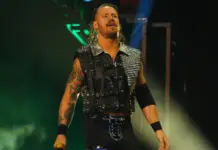
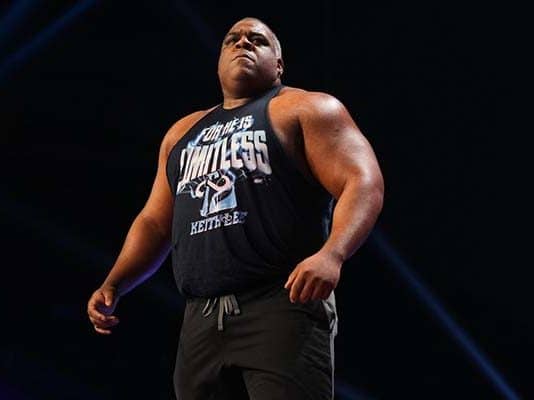
Bischoff was more positive about the involvement of Sting and his son Steven Borden during the Falls Count Anywhere TNT Championship match between Darby Allin and Kevin Knight.
During the match, Sting appeared to deal with Brian Cage and Mark Davis before joining his son in the ring. Sting and Borden climbed opposite sides of a ladder, with Sting offering his son some encouragement before climbing back down and allowing Borden to perform a dive. Allin ultimately won the match and captured the TNT Championship.
Bischoff said he enjoyed the moment but expressed concern that Borden could be receiving significant exposure before gaining enough in-ring experience. “I did. I enjoyed it. I enjoyed it for Steve. I enjoyed it for his son,” Bischoff said. “Sting, I got to be careful what I say here, because Sting was very supportive of my son Garrett when Garrett broke into the business, and I don’t want to sound like I’m unsupportive, but my concern, and I say this as a friend, my concern is that they’re pushing Sting’s son a little too early.”
Bischoff argued that Borden simply needs more repetitions before being placed in prominent situations. “He’s not ready for the positions that he’s being put into. He barely knows his way around the ring, and now he’s doing high spots like he did,” Bischoff said. “Because if he’s not ready, you’ll end up in the same position as an Eric Watts, for example, of getting the push, getting the visibility, getting the highlights or the spot, but not really having the experience. And that’s all it is, is reps.”
Watts, the son of Bill Watts, received a prominent push in WCW during the early 1990s while his father was running the promotion. Thompson countered that Borden has been gaining experience through training with Dustin Rhodes in Texas and working dark matches, while characterizing his All In involvement as a cameo rather than an actual match.
The discussion ultimately returned to the wider context behind Bischoff’s assessment of All In. Thompson argued that Bischoff was effectively watching the event in a vacuum without regularly following AEW’s weekly television and storylines.
Bischoff acknowledged that point and confirmed that he had watched very little AEW programming over approximately the previous four months.