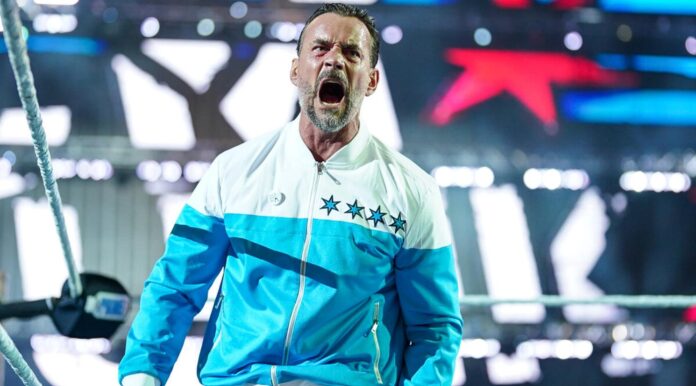
Kevin Nash has shed new light on why his planned WWE match against CM Punk in 2011 never came to fruition. Speaking on his podcast, Nash explained that backstage tension involving Paul Levesque—better known as Triple H—led to a major creative shift at the time.
According to Nash, the original plan was for him to feud with Punk following WWE SummerSlam, but things changed after Punk made an unscripted comment that angered Levesque.
“When I was supposed to wrestle CM Punk after I cost him the belt [at SummerSlam], he said something that pissed off Paul [Triple H] about something with him and Stephanie. It wasn’t on the script, and it pissed Paul off.”
Nash recalled that Levesque’s reaction was immediate and intense, resulting in Triple H inserting himself into the program instead.
“Paul came back and basically said, ‘You’re not wrestling Punk. I am. I’m beating that motherf*cker.’ Like, he was that hot.”
Nash emphasized that the situation wasn’t about insecurity, but rather about power dynamics and emotion in the moment.
“So I know how hot [he] can get, and it wasn’t like Paul is a btch. It was like, ‘Oh, okay, motherfcker.’ Basically like, ‘Oh, okay. Kliq rules. Like, you want to pull them out and measure them? Here we go. Suck on that.’”
Despite the conflict at the time, Nash contrasted that era with the present-day relationship between Levesque and Punk, noting how much trust now exists between the two.
“But I know how f*cking much Paul cares for him now, and what it took to bring him back, and everything that happened. And Paul trusting Phil [Punk] with everything that he’s done, and vice versa for each other, that relationship.”
Nash closed by pointing out how quickly animosity can fade in professional wrestling when business interests align.
“That’s what people don’t understand that aren’t in the business—you can have that kind of f*cking heat with somebody ten years ago. but man, when you got to make money and make music together, how quickly that dissolves.”
The story offers rare insight into the backstage politics of WWE during a turbulent period—and highlights just how much relationships can evolve over time in the wrestling business.