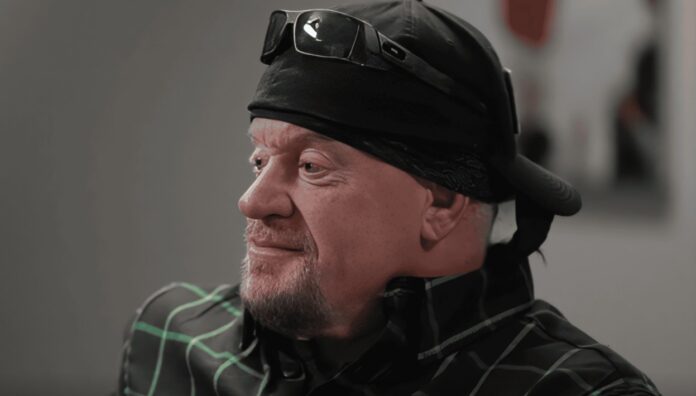
The Undertaker believes today’s wrestlers are the most gifted athletes the industry has ever seen—but he also thinks many are sacrificing storytelling in pursuit of increasingly spectacular moves.
Speaking on Insight with Chris Van Vliet, the WWE Hall of Famer and current AAA creative leader discussed the advice he regularly gives to younger talent.
His first point is about reducing unnecessary risk.
“I try to get them to calm down a little bit in the sense of all of the crazy, I call them flippy doos and stuff like that.”
Undertaker stressed that professional wrestling is already inherently dangerous, even before adding high-risk maneuvers.
“Wrestling is dangerous enough… within the course of any match, you’re always just a couple inches away from something really catastrophic happening.”
He argued that increasingly complex aerial moves only increase those dangers.
“When you start doing double backflips off of things and landing on people, that risk goes up exponentially.”
Despite that criticism, Undertaker was quick to praise the current generation’s athletic ability.
“This level of athlete that’s out here today is by far the greatest in the history of our industry.”
His concern, however, is that many performers overlook the fundamentals that make fans emotionally invest in a match.
“They kind of forget storytelling, and storytelling just isn’t about the angle that the Booker comes up with. Storytelling is how you do your matches and the things that you make a priority.”
According to Undertaker, audiences quickly become desensitized to spectacular spots when they are performed too frequently.
“You see a double backflip, half twist, gainer onto somebody on the floor, and you’ve seen it two or three weeks in a row, and then you’re kind of like, ‘Okay, I’ve seen that. Now, what do you got for me?'”
Instead of constantly trying to top the previous week’s stunt, he believes wrestlers should focus on making their characters matter.
“You make your job harder, as opposed to making the character mean something.”
For Undertaker, long-term success comes from creating emotional investment rather than simply impressing audiences athletically.
“Trying to get the character to evoke some kind of emotion, whether good, bad, or indifferent. That’s the key to long-term.”
He summed up his philosophy by saying there’s a balance every wrestler needs to find.
“There’s a fine line between the athleticism and the storytelling aspect, and I just try to get the young guys to think a little bit more about the storytelling.”
Later in the interview, Undertaker expanded on the life lessons wrestling has taught him, comparing success in the ring to overcoming adversity in everyday life.
“Sometimes you just have to get up every day, embrace the suck, and just keep grinding.”
He noted that, just like in wrestling, life’s biggest rewards often take time to arrive.
Interestingly, Undertaker isn’t alone in expressing those views. Kevin Nash recently argued that modern wrestling has lost some of the feeling that two people are genuinely fighting, while AJ Styles said his 19-year-old son is learning ring psychology that many fans who only consume highlight clips never fully appreciate. Together, the comments reflect a recurring theme among veteran performers: athleticism continues to evolve, but storytelling remains what gives great wrestling its lasting impact.