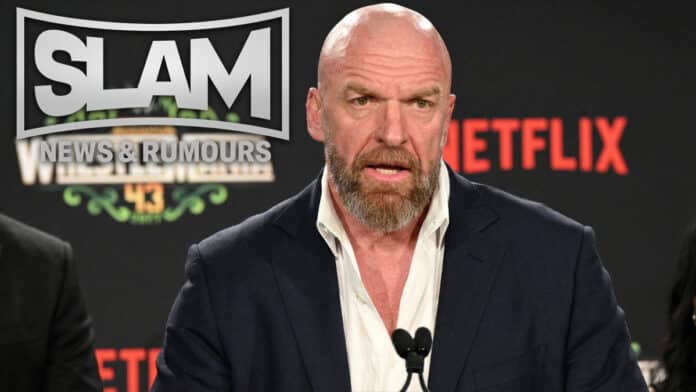
WWE Chief Content Officer Paul “Triple H” Levesque has opened up about the realities of WWE’s creative process, emphasizing the constant need to adapt as circumstances evolve.
Speaking with Joe Tessitore ahead of WrestleMania 42, Levesque explained how fan reactions and real-world variables can force WWE to pivot away from long-term plans.
“Sometimes you’re surprised by the way you think a crowd is going to react to something, and they react differently.
Sometimes it’s, you know, when you’re putting stuff together in your mind—Dusty Rhodes used to say this all the time to me—that in your mind you see things 100%. If you can get 70% of that to come out on the screen, that’s a grand slam.”
Levesque noted that even the most carefully planned ideas rarely translate exactly as envisioned, due to the unpredictable nature of live entertainment.
“In your mind, you picture it perfectly. In execution, it’s different. There are a million variables that can change it, that bring it down a notch or two or three or twenty—whatever it is. So things turn out differently. Fans begin to react to things differently. What you thought you had locked in four months ago is not the path anymore—the path has changed.”
He also highlighted a key difference between WWE and traditional sports, pointing out that there are no true replacements for top stars when unforeseen issues arise.
“The other thing about our business is, unlike a sport, as bad as it is—if you lose your quarterback, if you lose your first-string offensive lineman, if you lose your star center or guard in the NBA—you have a second-string guy to back them up. And you hope those second-string guys are pretty good.
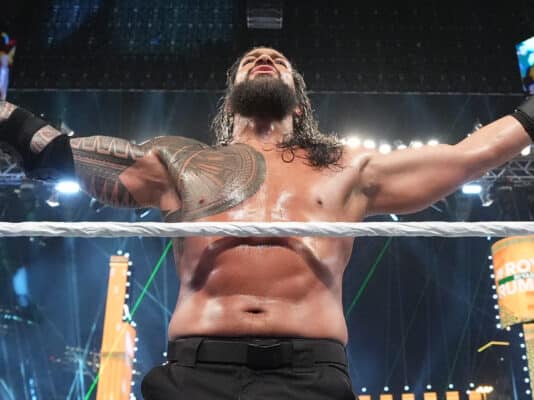
There is no backup Cody Rhodes. There is no backup Randy Orton. There’s no backup Roman Reigns. There’s no backup CM Punk.”
Levesque compared WWE’s storytelling to a live production where anything can change at a moment’s notice, particularly when injuries or unforeseen circumstances come into play.
“It’s different because it’s the individual attraction. Unlike a television show, even if you put the sports and entertainment side together, there’s always the factor of the human being.
So you can write the greatest script in the world to get you to the ultimate battle scene, and then right before that scene, the star of the show gets injured.
There’s no waiting until he’s uninjured to shoot the final scene. It’s live, and it’s going to happen one way or the other. Whether you want to do it or not on that particular date, the variables are so many—and they’re so varied—that you have to, at any given time, be ready for anything and be able to move on from anything.”
While acknowledging the challenges, Levesque admitted that adapting on the fly is simply part of the business.
“It doesn’t mean it’s easy. It doesn’t mean it’s not the most frustrating thing I’ve ever experienced. But it’s just part of what we do.”
With WrestleMania 42 approaching, Levesque’s comments provide insight into the ever-changing nature of WWE creative and the challenges involved in delivering its biggest event of the year.