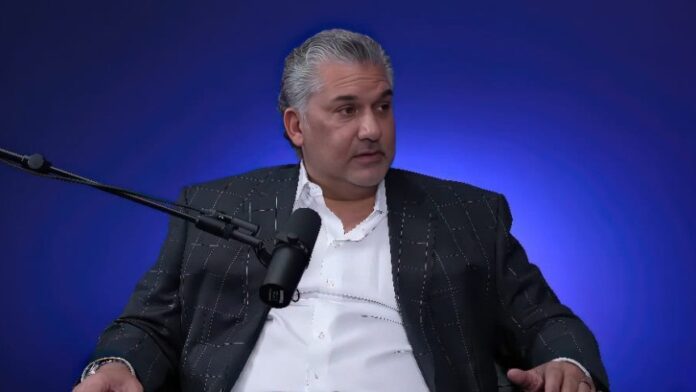
WWE president, Nick Khan, who has gained significant influence within the corporate structure of the company in the past few years, said the quiet part out loud.
While appearing on The Deal podcast, a show co-hosted by Major League Baseball legend, Alex Rodriguez at the Bloomberg Screen Time Conference, Khan addressed WWE ticket-pricing, a subject that was debated when Wrestlemania seats were slow to move earlier this year. There was no doubt that the sluggish sales were based on the price, as the company offered a series of discounts, something rarely seen in the modern era, in the weeks ahead of showtime. Last week when discussing the price of admission to WWE pay-per-views and events, Khan specifically said that the organization looks to price the floor seats for someone “A-Rod level,” whereas the upper bowl would be priced more family-friendly, “but not too family-friendly because then they can go to third party brokers.”
In short, TKO wants all of your money and they will even take a few extra steps to make sure that nobody else can get a cent of it either for their shows. From strictly a business perspective, especially for investors of TKO stock, this is exactly what you want to hear. This is where the merger with the Ultimate Fighting Championship, and more specifically, the ownership under the Endeavor banner brings with it enough media muscle to dictate the terms of the industry.
The WWE is the professional wrestling brand in the United States, and TKO is working on a regular basis to cement that status around the globe, too. They bought AAA to get a foothold in Mexico so even though the typical WWE initials weren’t going to be accepted by the native fan base, the money is still going in the same pocket through the letters of AAA. Business in Japan is down at the moment, partially because of the domino effect of Tony Khan signing away most of New Japan’s top stars, but CyberFight owns enough of the market share that outside of an annual tour of a few events, TKO isn’t going to try to plant a flag anywhere in Japan. The point being, the general public recognizes that WWE is the representation of sports entertainment in America, which is why deals like the ESPN contract for pay-per-views are key. If ESPN, Netflix, and any other company partner with the WWE, they quite literally have a vested interest in the success of the WWE product. When the most casual fan sees someone from WWE on an ESPN talk show to promote an upcoming PPV, it doesn’t matter if they subscribe to the streaming service for that particular show. Instead, it’s another way to solidify the WWE brand among the general public, leading to increased viewership for something more common like Wrestlemania or Summer Slam.
The ability to have that brand awareness is much bigger than any star-rating system can measure. This isn’t a story about All Elite Wrestling, but this is where the ramifications of AEW basically being a niche product matter. How many people that are casually aware of wrestling that see the WWE representation on ESPN are going to pay to watch the blood-drinking that happened at last weekend’s AEW show?
With AEW being a niche, WWE is the major option for wrestling fans in America, hence why TKO can not only try to squeeze as many dollars out of the audience as possible, but Nick Khan can say it publicly.
Of course, the “customers” of the WWE product have the right to decline to purchase or participant in the TKO business transaction, and some of them have. But, as we know, the die hard demographic of the WWE audience, those that would bow if Vince McMahon returned to television, will be more than happy to continue to pay the increasing prices in exchange for less overall value for their money, at least for now.
That’s the concerning part of all of this. When audio of TKO President, Mark Shapiro from a college lecture surfaced online, it revealed that the corporation knew that their pricing policies would chase away some traditional fans, but in the big picture they looked to target more fans overall. Obviously, private lecture to business students isn’t a public forum. So, why would Nick Khan be so public with the notion that yes, WWE looks to intentionally price out a portion of its audience?
The answer is simple, and reveals the target demographic for TKO. Nick Khan wants the investors to know that their money will be put to good use, and most importantly, there will be a healthy return on their investment.
It’s not breaking news, but taking the company public is ultimately what allowed WWE to become a billion dollar corporation in the first place. The merger with the UFC to form TKO only strengthened that position. As much as it sounds like a cutthroat business strategy, and in some ways it is, TKO has a legal obligation to work within the best internet of its shareholders, which was proven by the slew of lawsuits brought by stockholders in recent years. Don’t get me wrong, there’s no doubt that management has to spin a lot of plates to make a publicly-traded, global corporation run properly, and they have to serve a lot of masters in the process, but the reality is, the investors are first in line, not the fans.
Nick Khan can say the quiet part out loud to reassure the investors because if wrestling fans want to watch pro wrestling in the United States, they are going to watch WWE. We’re talking about the general public, not the die hard fan base that follows the independents or Japan. WWE tries to sell the lowest common denominator to the widest demographic possible, which is one of the many reasons that the promotion is as successful as it is today. Basically, the WWE is still the Walmart of pro wrestling, it’s easily accessible and in most cases, still affordable to follow, even if live attendance isn’t a realistic option for some viewers.
The alternative for most of the mainstream audience is to not watch or follow professional wrestling, and that’s the concerning aspect of this entire scenario.
Yes, all of the reasons that I just listed are why the audience continues to watch WWE despite the increase in cost that doesn’t reflect the overall quality of the actual sports entertainment product. Fans are paying more money to see more commercials, not more wrestling. When WWE has such a dominate market share that they can do those things to further monetize their product. However, and this might be the biggest takeaway from this situation in terms of a possible negative, there is definitely a tipping point where TKO could sour a noticeable portion of their audience. By nature, there’s only a limited amount of people that can afford those “A-Rod” level seats for WWE events, are those people going to be as dedicated compared to the much bigger demographic of average consumers? Just by the numbers, the answer is no. In short, TKO could be taking the short-end money now, albeit as massive as that amount of cash is, in exchange for the erosion of the overall audience in the future. Keep in mind, when WCW and ECW folded in 2001, the combined 10 million viewers that pro wrestling had on any given Monday declined by more than 60% within two years of the overall consolidation of the industry. It’s undoubtedly possible that the TKO business strategies of today has a detrimental effect on the business five years from now. The question is, are the efforts of TKO to maximize profits today disregarding the possible negative impact in the future because they will look to sell the WWE within the next decade?
Until next week
-Jim LaMotta
E mail [email protected] | You can follow me on Instagram, Facebook, & Threads @jimlamotta89