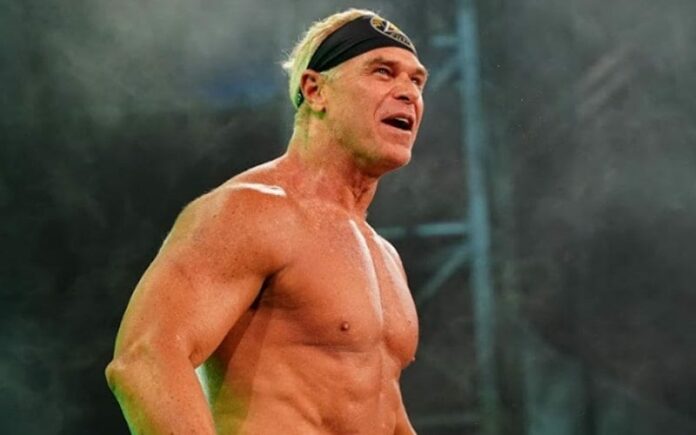
WWE Hall of Famer and current AEW coach Billy Gunn delivered a blunt and wide-ranging critique of modern professional wrestling while speaking to Eric Novak of the All Real Wrestling Podcast.
The veteran emphasized that many younger wrestlers are sacrificing storytelling, psychology, and longevity in favor of dangerous spots and highlight-reel athleticism.
Gunn argued that today’s performers often focus on what moves they can do rather than why they’re doing them. He singled out the overuse of flashy, high-risk maneuvers—particularly apron spots—as an example of unnecessary excess. “I don’t teach any of that crazy stuff, because it doesn’t get you anywhere. I have a million people that could do the same thing… So what is it different than you doing a Spanish Fly and him doing a Spanish Fly?”
He added that wrestlers mistakenly believe certain spots are more meaningful simply because they look more dangerous. “When you hit the side of the apron, it’s the same move as in the ring. The whole thing’s hard. Nobody out there knows the difference.”
According to Gunn, the obsession with nonstop big moves has eroded logical pacing and anticipation. He described a pattern he frequently sees where wrestlers rush through sequences without effort, tension, or emotional investment. “It’s just a non-stop festival of how many big moves I can do… There’s no storytelling with it. No effort, no work put into it.”
Gunn believes this approach strips wrestling of its core purpose: guiding the audience emotionally through a conflict.
A major theme of Gunn’s critique centered on what he sees as a loss of crowd psychology. While acknowledging that wrestling must evolve beyond the 1980s style, he argued that modern matches often start at maximum intensity, leaving nowhere to build. “We’ve gone from the dial at 50 to 100… I can only see a car crash a couple times before I go, ‘Yeah, I already saw it.’”
He warned that this leads to desensitization, where even spectacular moments stop feeling special.
Gunn stressed that athleticism alone isn’t enough to attract a broad audience. Without personal stakes or clear reasons to care, matches fail to connect beyond hardcore fans. “Nobody wants to see me and you wrestle because there’s no conflict.”
He offered a simple example of how storytelling creates instant emotional investment. “If you slapped my wife on the butt… now there’s tension. Now people want to see Billy beat you up. There has to be a reason to fight.”
As a coach, Gunn admitted his feedback isn’t always welcomed. Some wrestlers feel his advice limits their creativity, but he insists honesty is essential. “If it ain’t good, don’t ask me. I’m not here to pat you on the back.”
He clarified that his goal isn’t to eliminate high-impact moves entirely, but to place them within a structure that allows the audience to follow along. “There’s a place for all that stuff—but work to get to it. If you start at the top, there’s nowhere else to go.”
Gunn’s comments echo a growing debate within wrestling about longevity, safety, and storytelling. From his perspective, the future of the industry depends less on how extreme matches can become—and more on whether wrestlers can once again make fans care before they ever take a big risk.