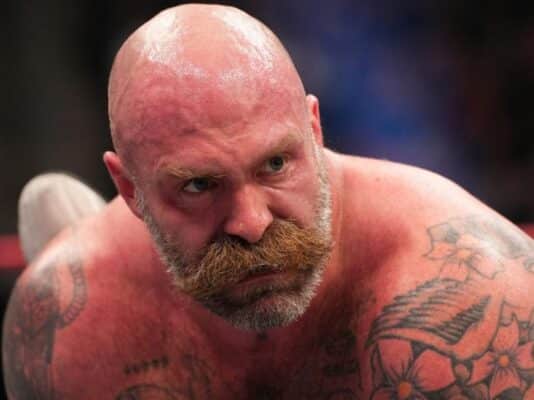
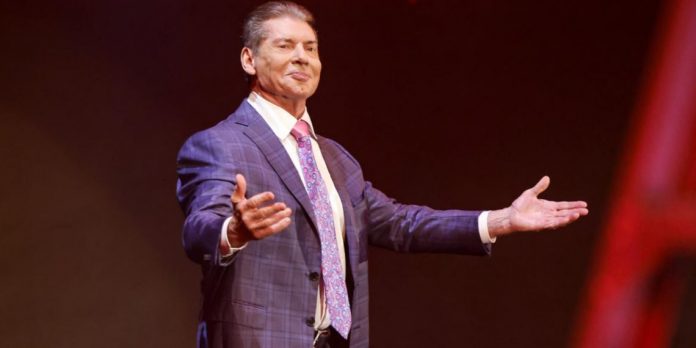
Former WWE writer Jimmy Jacobs recently offered a candid and deeply reflective look at his time working under Vince McMahon, describing a backstage culture driven by fear, micromanagement, and emotional volatility.
Speaking with SportShadow, Jacobs acknowledged that while he valued his overall experience with WWE, his working relationship with McMahon was particularly difficult—and far from unique. “Vince McMahon was a micromanager. While I loved working for WWE and enjoyed so much of it, I had a very difficult time working for Vince. I do not think I was alone in that experience; much of the culture there was based on a fear of him.”
Jacobs explained that over time, this atmosphere altered not only how he approached his job, but how creative decisions were made across the company. “I saw this transition within myself: I went from trying to do the best possible thing to simply trying to figure out what would not get me in trouble. I stopped taking risks and instead focused on what Vince would not yell at me for.”
According to Jacobs, that mindset ultimately filtered throughout the roster and creative teams, leading to a stagnation in innovation. “This resulted in a roster of people playing ‘not to lose’ as opposed to playing to win. In my observation, Vince McMahon acted as the archetype of the withholding father.”
He further described McMahon’s tendency to tightly control praise, creating an environment where approval was both rare and fleeting. “He was a master at withholding praise until he was ready to give it. Consequently, you had a group of people constantly looking to one man for validation, asking, ‘Am I okay? Is this good?’”
Jacobs recalled that criticism was widespread and often indiscriminate, with very few exceptions at the very top of the company hierarchy. “Vince criticized almost everyone at some point; nearly everyone ended up in the ‘doghouse.’ While performers like Brock Lesnar, Roman Reigns, and legends like The Undertaker were on a different level with him, Vince would regularly disparage the rest of the roster.”
Even strong performances were not immune, according to Jacobs, who noted that McMahon would frequently tear apart matches that talent and writers believed had succeeded. “I remember high-level, top-tier performers main-eventing Raw in matches they—and I—thought were good, only for Vince to completely tear them down.”
The aftermath of those encounters often left performers questioning their own instincts and abilities. “These performers would walk away wondering if they even knew what was good anymore because Vince had just yelled at them about their match.”
Jacobs concluded by characterizing the environment as one shaped by emotional unpredictability and fear-driven compliance. “The culture essentially cast Vince as a bully. People spent their time trying to avoid his anger or being fired, all while desperately searching for his praise.” He continued, “This happened to me, and I saw it happen to others. People craved his approval, but he would give it and then withhold it again, running hot and cold.”
Jacobs’ comments add to the growing number of firsthand accounts offering insight into the internal culture of WWE during McMahon’s leadership—perspectives that continue to resonate as the company moves further into its post-McMahon era.