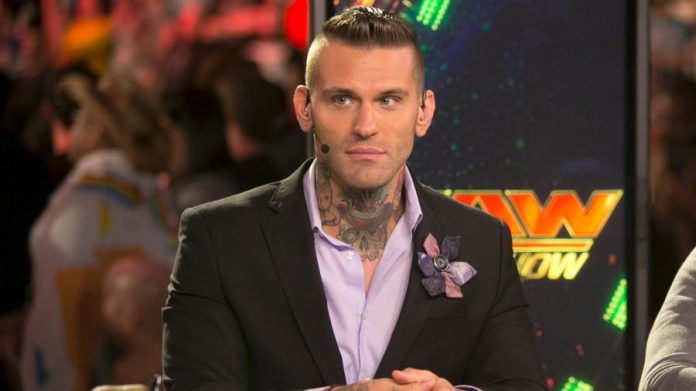
Corey Graves says some of WWE’s biggest stars consistently make a point of speaking with the commentary team before their matches — something he believes more wrestlers should be doing.
During an appearance on Busted Open Radio, Graves discussed the importance of wrestlers communicating the story they want to tell before stepping into the ring. By giving the announcers that information, Graves believes commentary can reinforce the intended narrative and help keep things on course when something doesn’t go according to plan.
“I cannot overstate how important it is for talent. Hopefully some of them are listening to this right now. I know that I sort of appear to be kind of a grumpy guy. I’m really not hard to get along with, especially when I’m sitting at the commentary desk all day while rehearsals are happening or walkthroughs, etc.
“If you tell me what you want your story to be, I will tell it for you, and I will most likely enhance it for you. I will put my spin on things and maybe do it my own way, but I will make sure that what you want conveyed is conveyed,” Graves said.
Despite the potential benefits, Graves said a surprisingly small percentage of WWE talent regularly seek out the announcers beforehand. He has noticed, however, that many of the performers who do so are the same names who consistently occupy prominent positions on the card.
“With that said, there’s a remarkably low number of talents who make sure they seek out myself or Michael Cole or Wade Barrett or Joe Tess or even Vic and Booker. And it’s funny because those are always the stars that populate the top of the card.”
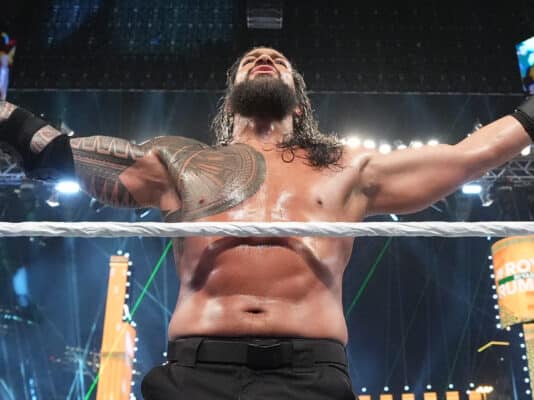
Graves specifically highlighted John Cena, AJ Styles and Roman Reigns as examples of wrestlers who have consistently ensured that he understood what they wanted to accomplish before calling their matches.
“Off the top of my head, I will tell you every match of his I ever called: John Cena found me, AJ Styles found me, Roman Reigns finds me. They make sure it, obviously it’s pro wrestling, right? It’s not rocket science. There likely isn’t something that’s going to be totally missed, but better safe than sorry.”
For Graves, that preparation becomes even more valuable when a match doesn’t unfold exactly as intended. If the commentary team understands the destination, he believes the announcers can help guide the audience back toward the story the wrestlers were attempting to tell.
“And if you arm us as the commentators with the information that you want the audience to know, we’re sort of that last line of defense. If something doesn’t go right, which God knows happens all the time, if I know where you’re trying to go or what your goal was, nine times out of ten, I can spin something to get the train back on the track.
“It’s not necessarily going to clean up all the mess as a whole, but it will, you know, smooth down some of the sharp edges of what’s going wrong at the moment,” Graves said.
Graves’ comments offer some insight into the preparation that takes place between wrestlers and WWE’s broadcast team, while also highlighting a habit he has noticed among several of the company’s most successful performers.