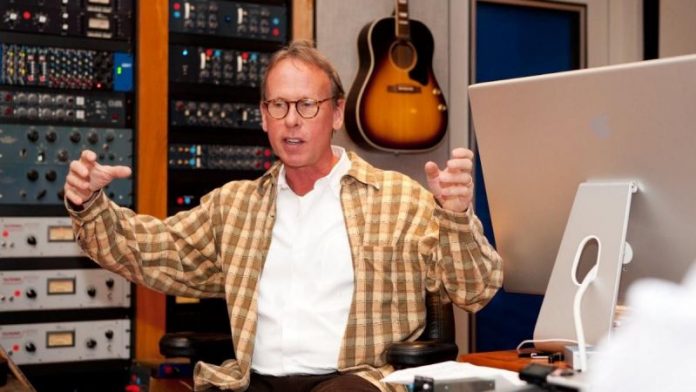
Legendary former WWE composer Jim Johnston has offered a critical assessment of modern wrestling entrance music, arguing that today’s themes have become too generic and no longer help performers develop distinct identities.
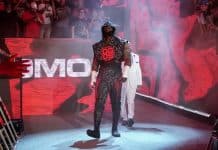
Johnston, who created entrance music for WWE stars for more than three decades, discussed the subject during an appearance on Ropes & Riffs. He explained that during his WWE tenure, he rarely needed to speak directly with wrestlers before composing their themes. Instead, Vince McMahon and longtime executive producer Kevin Dunn would provide him with descriptions and footage, allowing Johnston to determine what the music needed to communicate about the character.
Johnston believes that philosophy is largely missing from modern wrestling themes. “It’s a perfect segue to where I think things are now, which I, sorry, is pretty awful because it’s generic. They’re not scores to the people. The music’s not saying anything about the character. You could take this theme and just give it to the next guy, and it would feel the same when he came out. It’s like it’s big music. It’s exciting. There’s lots of sound effects and big drum loops and crazy guitar solos and everything else. But the days of being in the kitchen and the TV’s in the living room and being able to know exactly who’s coming out? That’s not happening.”
Johnston went further, arguing that the lack of distinctive presentation is one factor preventing wrestling from creating stars on the level of Steve Austin and The Rock. “And it’s also I think bad for business because I think that’s why the business is not really creating stars. There are not new Stone Colds and new Rocks. There are guys who are popular, but it’s like a ceiling now. There’s no one breaking through and jumping into Hollywood and the movies anymore.”
According to Johnston, fans have contacted him with similar complaints. He described the difference by saying, “The themes used to really be tied to this human being, and now it’s music that coincidentally plays when wrestlers walk out to the ring.”
Johnston acknowledged that he no longer regularly watches professional wrestling beyond occasionally catching a few minutes while changing channels. He added that another criticism he frequently hears from fans is that storylines “come out of nowhere and change too fast.”
When asked whether wrestlers themselves are best positioned to determine what music fits their characters, Johnston strongly disagreed. “Absolutely not. Just like Harrison Ford is not the best person to ask about who should be the score for this movie I’m making.”
Johnston believes a composer and director need enough distance to understand how the character fits into the broader presentation. Working too closely around a performer’s personal musical tastes, he argued, can result in a much shallower approach. “When you’re dealing directly with the performer, it just becomes this sort of shallow thing of when I’m driving in my car, every time this song comes on, I drive faster.”
He pointed to D-Generation X as an example of a wrestler accepting music that might not necessarily have been his personal preference. Johnston recalled being uncertain whether Shawn Michaels or McMahon would approve of the theme, particularly because of its lengthy introduction, something he described as “the kiss of death for entrance themes.” Michaels, however, understood that the music was intended to score his character rather than simply be something he would listen to at home.
Johnston also reflected on how he initially became involved with WWE. Early in his career, he met McMahon’s art director at a sushi bar and agreed to create music for a video being produced for a cable television conference. McMahon liked Johnston’s work and asked what else he could do, beginning a relationship that ultimately lasted more than three decades.
He recalled that WWE once had an “ironclad rule” that only babyfaces received entrance music, something Johnston repeatedly challenged. “That was like an ironclad rule, which I have to say I fought for a long time because my argument was, look in the movies. Oftentimes, the villain has the best music, right? Darth Vader, Jaws.”
When heels initially began receiving their own sounds, Johnston recalled some being given “toilet flushing and things like that.”
Johnston also said he resisted relying on cultural stereotypes when creating themes for wrestlers from different backgrounds, including automatically using hip-hop for Black performers. His preference was to establish the wrestler’s character first, with their background being only one element of the overall presentation. “He’s a fierce guy. He’s an incredible wrestler. Oh, he’s also Japanese.”
Elsewhere in the interview, Johnston revealed that the inspiration for Triple H’s “My Time” theme unexpectedly came from Chyna. Johnston was backstage speaking with her during a transitional period in both Chyna and Triple H’s careers when a comment she made immediately sparked the idea. “She was being so kind to him and reassuring him it’s going to work out, and suddenly she said, you know, it’s your time, and I was like, it’s my time. That’s it, my time.”
Johnston also explained that the song’s distinctive warbling effect came from aggressively manipulating the mod wheel on a synthesizer in time with the track, an experiment he joked he would have been too embarrassed to attempt with somebody else in the room.
Some of Johnston’s WWE assignments came together under extreme time pressure. He said the fastest theme he ever created took roughly an hour, recalling situations where Raw’s music would be transmitted to the venue by satellite at 6:30 p.m. ahead of a 9 p.m. broadcast despite character changes potentially being handed to him as late as 5 p.m.
Johnston also discussed WWE working with outside bands such as Saliva to record versions of existing themes, explaining that the arrangement immediately exposed those artists to WWE’s large audience. He also praised Downstait for being receptive when he encouraged the band to move closer to an original version of a song.
Despite creating some of the most recognizable entrance themes in wrestling history, Johnston said he owns the copyright to “nothing” from his WWE work.
Looking ahead, Johnston revealed that he has been finishing two songs titled “We Are the Lucky Ones” and “I Make You Feel Alive,” which he plans to release, while also working on new music with Brand New Sin’s Joe Altier.