Since I penned an article about the state of the union for the WWE, I thought it was also fair to do the same for All Elite Wrestling, the second-largest group in the United States, that just had their finale of 2025 on pay-per-view with the Worlds End event. I parsed details on that particular card in a column of its own so I won’t rehash that here, but obviously, the results of the show will impact at least the early portion of 2026.
In many ways, writing this article might seem like a retread of the same concept that I wrote last year, as the strong points for the organization, as well as the weak spots, have remained the same for the past three or four years. That’s as frustrating as it is disappointing, but specifically after the path that AEW took this year, I think that the pitfalls of the promotion are just a part of the package, which isn’t meant to be a total knock on the product, but rather to point out that Tony Khan pays the bills so if it’s what he wants to see then he’s going to book it for his television show. It’s one of the perks of the job, even if it goes against overall business sense.
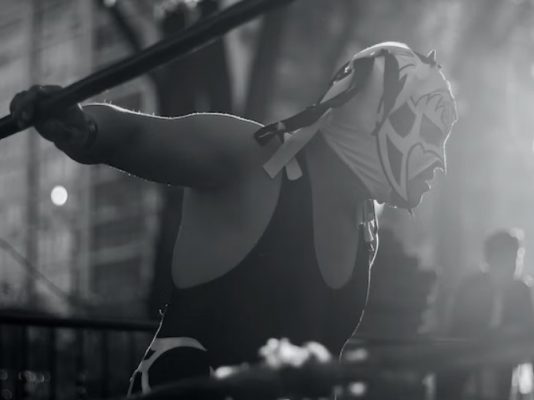
The program is too all over the place without a structured pace, but for the agenda for 2026, I’d say that there must be more of a direct effort to educate the audience on some of the absolutely stellar foreign talent that show up on AEW television. There skills aren’t in doubt, but without framing them in the proper context, it undersells the true potential and theoretically, the drawing power that they can bring to the table. As one of many examples, instead of Neon randomly popping up in a trios match for CMLL titles that most of the audience is clueless about at the start of a pay-per-view, simple video packages could be used to give these guys the proper introduction and thus the spotlight. At some point, the audience chalks it up to another random guy in a mask because nothing is explained and there’s no consistency for exposure to establish these stars to the American audience.
The bottom line is, as I’ve written before, too often Tony Khan has The Wrestling Observer mindset that the crowd is as well-versed in the absolute most obscure and nuanced reference in the industry as he is. That’s just not the case. If it was, one of the many smart mark groups that have catered to the internet fan base previously would’ve been able to truly make the jump to the national stage long before AEW existed. ECW was a niche, but had enough of a mainstream appeal to peel off a portion of the audience that watched the other big two at the time. Ring Of Honor was even more niche than that and survived nine years as an independently-owned promotion, with less of an overall impact on the business than ECW, before it was sold to Sinclair Broadcasting in 2011. Don’t get me wrong, I’m not discounting the diehard style of professional wrestling that has such a passionate following that sustains itself for years, but rather to point out that it’s simply not enough of a market share to truly be successful on the national scene where AEW promotes itself. The Dynamite Kid, Brian Pillman, Hayabusa, Misawa, Kobashi, Minoru Suzuki, Dr. Tom Prichard, Chris Candido, and Brad Armstrong are just some of the names that deserve way more credit for their contributions to the business. Bret was right about Shawn in 1997. The Ultimate Warrior was a one-trick pony that was 99% media creation, and who knows if he actually made peace with those around him before he passed away? The problem is, Will Ospreay might be exponentially more talented in the ring than The Miz, but there’s a reason that exponentially more people have heard of The Miz than Will Ospreay. A Wrestlemania main event, as underwhelming as it was, has a lot of cache among the causal fans.
That’s not to say that there’s only one correct way to produce and promote pro wrestling. We saw in the boom period of the late-90s that three different groups with three different philosophies drew money as national entities. At the same time, there was a reason that the territories before that were very lucrative on a smaller scale, as Mid-South was tailored to its area, but wouldn’t have translated to the north east at the time. Maybe it’s a moot point because money is no object to Tony, but if nothing else, he must at least attempt to cast a wider net as far as a product that is aimed toward more viewers to try to keep AEW from being pigeon-holed into a secondary position the way that TNA was for years under Dixie Carter.
Aside from diversifying and in some respects simplifying the product, I’d say that there has to be some tough decisions made with talent. The bottom line is, there’s no reason to keep interchangeable wrestlers under contract, especially when it hinders their overall potential. One of the best examples of this is that Mike Santana was stuck in All Elite purgatory until he took a chance on himself and requested a release so he could pursue his options in TNA. Santana is arguably doing the best work of his career and is one of the top names in the organization. Frankie Kazarian is another example of someone who left AEW to try to rejuvenate his career in TNA. While I’m not sure if I would’ve booked Kazarian as the world champion at this point in his career, he’s still a very solid talent. The bottom line is, if those guys weren’t going to get the chance to do something of more importance in their careers if they would’ve been stuck in catering during Dynamite tapings. That’s not a jab at Tony, but rather to explain that talent shifting around is a part of the industry, as it allows new opportunities for everyone involved. There are only so many featured spots on any roster so it makes sense for talent to test the waters elsewhere. The problem is, there are numerous names on the roster that are in the witness protection program that would probably be able to make bigger contributions to the industry as a whole in a different organization. With as slim as New Japan is on talent between the launch of AEW in 2019 and the pandemic that followed it, there’s no reason that some of the talents that haven’t been given anything of substance in All Elite couldn’t make a splash in Japan.
In short, cutting talent is better for the organization from a payroll perspective, and will probably be better for the wrestlers in the long run. Along with that, as odd as this might’ve sounded a few years ago, I think it would be wise for Jon Moxley to either take an extremely long vacation completely away from the promotion or consider a return to WWE when his AEW contract expires. I say that because the Death Riders angle was so tedious and at some point, complete drek last year that as a character, Moxley needs to put as much distance between himself and the storyline as possible. The whole thing went on for the majority of the year and ultimately had no point or purpose behind it. The stain of the dissatisfaction from the angle is still upon Moxley, there’s really no hype around his persona. The Jim Cornette notion of, “how can we miss you if you don’t go away” sums up this situation. Moxley either needs to be away from television or work elsewhere, that’s the amount of rejection was associated with the Death Riders storyline.
Finally, there should be a direct effort to differentiate who the top guys are. Too often during AEW programming, everyone is booked at a 50/50 rate, both in terms of perception and the matches themselves. Not everyone has to be a back and fourth epic Tokyo Dome classic. The matches should be structured in a way that truly showcase who the promotion wants to invest in as the top-tier guys that will be responsible for selling tickets and pay-per-views. That’s not to say that we should go back to the squash matches of the 80s when it looked like the guy that works at the deli is in there to get pummeled by Brian Cage for a few minutes, but rather you can book competitive matches where there’s still an objective to specifically shine a wrestler.
If you try to get everyone over, nobody gets over. The main event scene was unsteady in the second half of 2025, but Tony should pick half a dozen wrestlers that he considers a priority. Those six performers should be booked in ways that spotlight them, and more importantly, they aren’t put in any position to take away from the status that they are the future of the organization. Konosuke Takeshita, MJF, Kyle Fletcher, Will Ospreay, Swerve, and Kris Statlander should be a focus in 2026.
What do you think? Share your thoughts, opinions, feedback, and anything else that was raised on Twitter @PWMania and Facebook.com/PWMania.
Until next week
-Jim LaMotta
Email [email protected] | You can follow me on Instagram, Facebook, & Threads @jimlamotta89