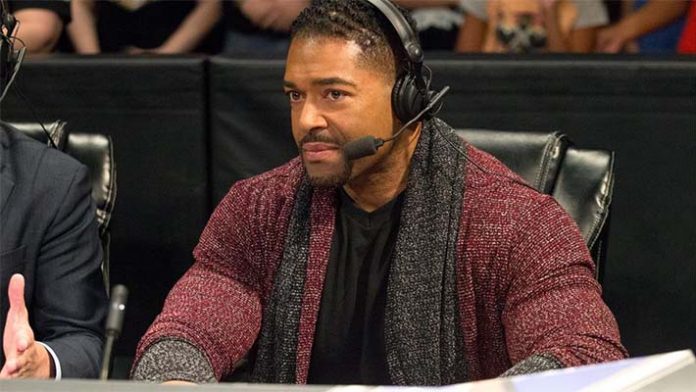
Former WWE Superstar and attorney David Otunga has offered his legal perspective on a lawsuit filed against WWE and Montez Ford over an alleged incident involving an off-duty security officer during Monday Night Raw.
Cook County Sheriff’s officer Noel Lucas, who was working off-duty security at the July 6, 2026, episode of WWE Raw, has filed a lawsuit naming WWE, Ford (real name Kenneth Crawford) and WWE subsidiary Event Services, LLC.
Lucas alleges that Ford performed an unwanted sexualized lap dance on him during the live Netflix broadcast and that footage of the encounter was subsequently promoted on social media.
In a video published on his YouTube channel, Otunga examined the allegations and discussed how the incident could be evaluated under Illinois law.
“Lucas says he didn’t consent. That’s his allegation, not a court finding, but we shouldn’t assume he agreed just because he stayed seated or smiled,” Otunga explained. “People laugh when they’re amused, but they also laugh when they’re uncomfortable or trying to get through an awkward moment.”
Otunga emphasized that Lucas’ visible reaction during the segment does not necessarily establish whether he consented to the contact. “We can see his face, but we can’t read his mind. The defense can point to his reaction, but Lucas can explain it. A smile doesn’t automatically mean permission, and he doesn’t have to shove somebody or make a scene before his boundaries count.”
The former WWE star also questioned whether public reactions would differ if the security officer involved had been a woman. “Now imagine that Lucas was a woman. Think about it. What if this happened to a female security guard? Same dance, same contact, same allegation that she didn’t consent. Would your reaction change?”
Otunga argued that the legal principles surrounding unwanted physical contact apply regardless of gender. “A man shouldn’t have to accept contact we’d immediately question if it happened to a woman. The basic battery rule is the same. Being male, being a security guard, or being physically capable doesn’t mean that you have to laugh it off and just accept it.”
He also addressed the distinction between sexual harassment, battery and emotional distress, noting that each involves different legal requirements. “When we talk about sexual harassment, saying, ‘I didn’t mean any harm,’ isn’t an automatic defense,” Otunga said. “Illinois’ workplace definition considers the purpose or the effect of the conduct, but harassment, battery, and emotional distress have different legal requirements.”
Otunga then discussed the Illinois Gender Violence Act, explaining that its protections extend to men and that Lucas would need to establish the necessary elements of his claim.
According to Otunga, an additional camera angle could potentially strengthen Lucas’ arguments concerning the nature of the alleged contact and whether his movement was restricted. “The rubbing and sexual movements support his claim about the nature of the contact. Then look at Ford’s positioning. He’s basically straddling Lucas. From what I can see, Lucas would have to physically move forward in order to stand up.”
However, Otunga acknowledged that the defense could challenge that interpretation and stressed that the allegations still need to be proven. “So, this angle strengthens more than the battery claim. It helps the Gender Violence Act claim, too. But Lucas still has to prove the requirements and support the damages he’s asking for.”
Otunga’s analysis represents his legal opinion on the allegations and available footage, rather than a judicial determination of wrongdoing.
The claims against Ford, WWE and Event Services, LLC remain allegations, and no court finding establishing liability was identified in the information provided.