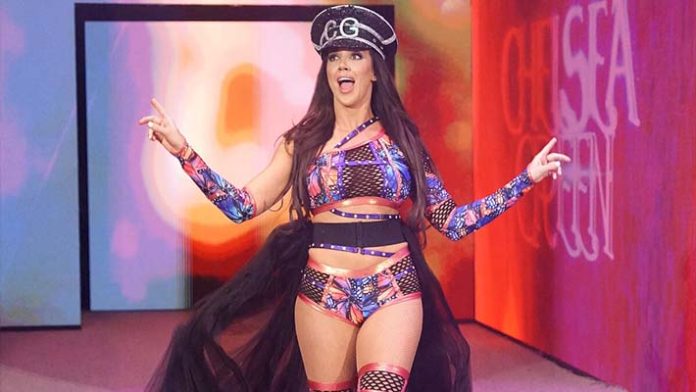
Chelsea Green has publicly addressed the controversial remarks made by WWE producer Michael Hayes regarding her position on the company’s roster.
The comments surfaced during the second season of the Netflix series WWE: Unreal, where Hayes was shown discussing Green’s value within WWE. In the clip, Hayes praised Green for maximizing limited television time and being highly effective in short segments, but stated that she is not built for — nor should she occupy — top-tier roles held by stars such as Charlotte Flair or Tiffany Stratton. Hayes added that Green’s role is to elevate those talents rather than to be positioned as a “top girl” herself.
Green addressed the remarks during a candid, long-form interview on Reality Checked on SiriusXM. She admitted that hearing such definitive statements from a high-ranking WWE official was deeply upsetting, particularly because the comments publicly placed a ceiling on her perceived potential.
“Okay, this is tea ladies because I have not done media since this came out. This really, really ruffled some feathers,” Green said. “So one of the head producers of WWE, his name is Michael Hayes. He works very closely with our boss, Triple H, and he basically on ‘Unreal’ said, ‘Chelsea makes the most out of her time, so we don’t need to give her 30 minutes. We give her 30 seconds, and she does the same work, which is great because she’s not meant to be here for 30 minutes. She’s meant to elevate all those girls to be in that top position, to be a main eventer.’”
While Green acknowledged that she understands the realities of wrestling’s internal hierarchy, she explained that hearing those limitations stated so plainly — and broadcast to a wide audience — hit harder than she expected.
“It’s crazy because I’m a self-aware human being, so I know my kind of place on the totem pole in this fake hierarchy that is wrestling,” Green continued. “But to actually hear it, to actually hear that there was a ceiling put on me, it’s different. You can’t help but be pissed off and a little upset and just aggravated at the fact that you thought that there was maybe a chance that there wasn’t that ceiling, that maybe it was all in your head and that it was confirmed — and it wasn’t confirmed to me, it was confirmed on national television.”
Green has carved out a successful niche in WWE through character work, comedic timing, and consistent television presence, most recently holding championship gold and remaining a regular fixture across multiple brands. However, her comments shed light on the emotional toll that comes with being publicly defined as a supporting player rather than a potential main event centerpiece.
The discussion has sparked debate among fans regarding opportunity, perception, and how roles are assigned within WWE — especially in a women’s division often praised for its depth and competitiveness.