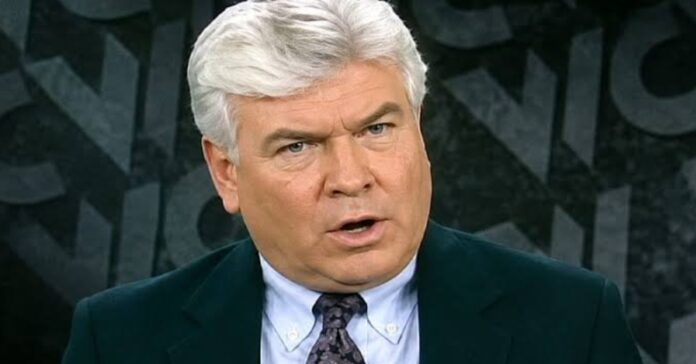
Jim Herd, the former World Championship Wrestling executive vice president who oversaw the promotion during a turbulent period in its history, passed away in October 2026 at the age of 87.
The news was revealed by podcast host and wrestling historian Conrad Thompson in his Uncrowned column, where he reflected on Herd’s tenure with WCW and the challenges he faced while attempting to turn the company into a profitable business.
Herd became WCW’s first executive vice president in 1989 following Turner Broadcasting’s acquisition of Jim Crockett Promotions. As an executive working under Ted Turner, Herd was tasked with improving the promotion’s financial performance at a time when the wrestling industry was undergoing significant changes.
His tenure, which lasted until January 1992, remains one of the most controversial periods in WCW history, particularly because of his strained relationship with Ric Flair.
Herd is perhaps best remembered for firing Flair in July 1991 after contract negotiations between the two sides broke down. The decision led to Flair joining the World Wrestling Federation, where he famously appeared on television with the WCW/NWA Big Gold Belt, creating one of the most memorable controversies of the era.
In his column, Thompson offered a different perspective on Herd’s time in charge, emphasizing that his primary responsibility was to address WCW’s financial difficulties rather than satisfy the expectations of wrestling fans.
“Jim Herd was hired to stop WCW losing money. As much as we don’t love the way it reads, it’s the truth that WCW never turned a profit with Ric Flair as their top star. Crockett lost so much money he had to sell and then WCW lost money every single year, no matter who was in charge, until another ‘non-wrestling guy’ — Eric Bischoff — took over.
Herd’s primary responsibility was to find the black ink. He tried Sting, he tried Flair as a babyface, he tried Luger, and nothing ever worked. When those attempts failed, Herd moved on into the casino business.”
Thompson also revealed that he had personally tracked down Herd several years earlier and spoken with him about his experiences in professional wrestling.
According to Thompson, Herd did not spend much time reflecting on his WCW tenure after leaving the company, viewing the position primarily as another step in his corporate career rather than a lifelong involvement in the wrestling industry.
“I tracked him down several years ago, and he explained he never looked back on wrestling because it stopped being fun for him. WCW was simply a job he took to advance up the Turner corporate ladder. He did his best and then moved on.”
Although Herd’s decisions remain controversial among longtime wrestling fans, his leadership coincided with a significant transitional period as WCW attempted to establish itself under Turner Broadcasting’s ownership.
His departure in January 1992 marked the end of a tenure remembered for major creative changes, financial challenges, and the highly publicized fallout with Flair.
Everyone at PWMania.com extends our condolences to Jim Herd’s family, friends, and loved ones.
https://t.co/4NyXxiMdIl
— Conrad the Mortgage Guy (@HeyHeyItsConrad) November 10, 2026