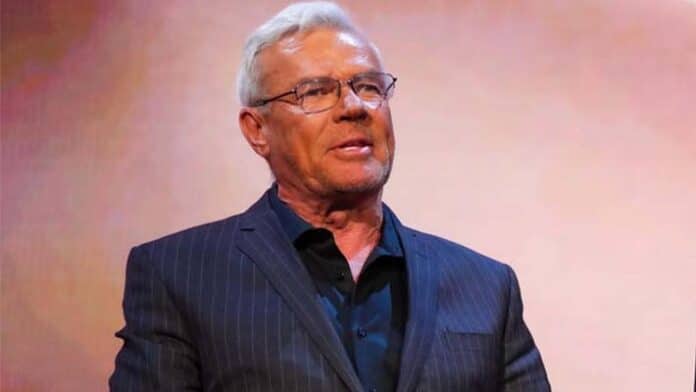
WWE Hall of Famer and former WCW President Eric Bischoff appeared on an episode of his 83 Weeks podcast, where he discussed various topics, including whether a ranking system could be effective in today’s wrestling.
Bischoff said, “I think it’s more needed now than it ever has been. Could it work? Yes. Would it take a tremendous amount of work, maintenance and discipline? Yes it would, because it could get out of control pretty quickly. Creative and — we’ll call this PR — would have to be really, really closely aligned in looking at the same calendars. Now that’s where it gets tricky, because a PR calendar, a marketing calendar, is looking 90 days out more often than not in terms of how they plan. Whereas live television, when changes have to — sometimes injuries, whatever, travel issues — require, ‘Okay, instead of taking a left we need to take a right, and everything else is going to have to adjust downstream.’ So the difference in timelines in syncing up between really optimizing your marketing and promotional opportunity to tie in with the TV opportunity. If you can achieve that and have that kind of thing supported by the ranking, so that it’s consistent across all your forms of entertainment, I think it would be an awesome thing because it gives you a framework.”
On what sports radio proves about rankings frameworks:
“If you don’t believe me — if this isn’t connecting with you for any reason — I beg you. Go to any national sports radio show that covers sports on Sirius or anywhere else you find it. There’s a lot of them out there, but they’re national shows. Check them out. And if you listen to them talk on Saturday, all of this is driven by betting. Everything is through the lens of the odds or what Vegas says, or the talking heads that happen to be talking about whatever game they’re talking about. It’s all within the architecture of the gaming industry. It’s what they have to talk about. It’s what they have to argue about. ‘You think somebody’s an underdog? I think they’re an easy bet.’ Whatever, it’s something to talk about other than statistics, and you work those in. So I think if there’s a way to do it and integrate it — that’ll be the challenge. How do you integrate that and support it across all your lines of contact with the audience? Because that’s what it would take to make it work.”
You can check out the complete podcast below.