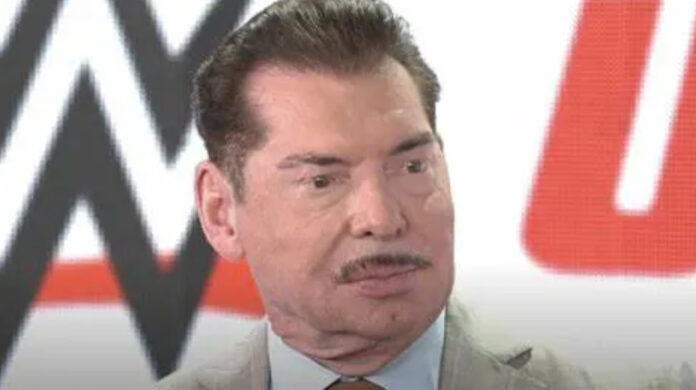
Vince McMahon’s leadership style has long been one of the most debated aspects of WWE’s history, with stories from former talent ranging from mentorship to outright psychological intimidation. That discussion resurfaced this week following comments made by Kevin Nash in response to allegations involving McMahon’s treatment of legendary commentator Jim Ross.
On the latest episode of Kliq This, host Sean Oliver read from remarks previously made by Matt Hardy, who claimed McMahon took pleasure in placing employees—particularly Ross—in uncomfortable situations. Hardy framed the behavior as a way to test for weakness, while also acknowledging that it frequently crossed into abuse.
“I think he was abusive with it as well, and JR probably was one of the guys he was more abusive with,” Hardy said.
Nash, who worked extensively with McMahon during his run as Diesel in the mid-1990s and later as part of the nWo in 2002, did not push back against Hardy’s assessment. Instead, he echoed the sentiment, citing Ross’s well-documented medical struggles as examples of how McMahon handled vulnerability.
“Vince is not going to get a Humanitarian of the Year Award anytime soon,” Nash said. “He gave JR a horrible time when JR had that Bell’s palsy.”
Ross has battled Bell’s palsy multiple times throughout his life, a condition that causes facial paralysis. Rather than being handled with sensitivity, the condition was frequently referenced on-screen. In 2005, WWE aired a widely criticized segment featuring the character “Dr. Heinie” performing a colonoscopy on a Jim Ross mannequin. Earlier, the WCW character “Oklahoma”—created by Vince Russo—also mocked Ross’s condition, though Nash’s comments suggest the culture of ridicule existed well beyond that specific instance.
Nash’s acknowledgment that McMahon gave Ross a “horrible time” reinforces a long-standing perception that illness or physical differences were viewed less as circumstances deserving compassion and more as weaknesses to be exploited—either for control or entertainment.
However, Nash was careful to differentiate Ross’s experience from his own. As a near seven-foot-tall performer positioned as a dominant force on screen, Nash explained that he was largely insulated from similar treatment. McMahon has historically shown favoritism toward larger-than-life performers, often interacting with them differently than with commentators or smaller talent.
“Not to me,” Nash said when asked if McMahon treated him the same way. “But I’m saying is, it’s like everything. When I was five foot nine and in fourth grade… and weighed like 100 pounds, and I got my ass beat every fucking day. I saw fucking kids getting picked on all the time. One of them was me. As life goes on, then that just doesn’t happen anymore.”
The discussion evolved into a broader reflection on wrestling as an industry built on pressure, survival, and adaptation. While Nash did not excuse abusive behavior, he framed it as part of an unforgiving environment where resilience determined longevity.
“I’ve lived the life of being picked on, and I’ve also watched it’s always going to be the strong survive,” Nash said. “And in essence, people know that the actual thing is the one that survives is the one that can adapt. So unlike them dinosaurs… adaptation is what you need to strive for.”
Nash’s remarks paint a picture of WWE during its most powerful eras as a ruthless ecosystem—one where McMahon’s methods, however cruel, functioned as a form of pressure-testing. Those who adapted endured; those who could not were left behind.
For Jim Ross, that adaptation meant weathering public humiliation while remaining the definitive voice of WWE for nearly two decades. For Nash, it meant leveraging stature, intelligence, and positioning to ensure he was never the target. While WWE’s internal culture has continued to evolve into 2026, Nash’s comments serve as a sobering reminder of the harsh interpersonal politics that shaped the company during its most influential years.