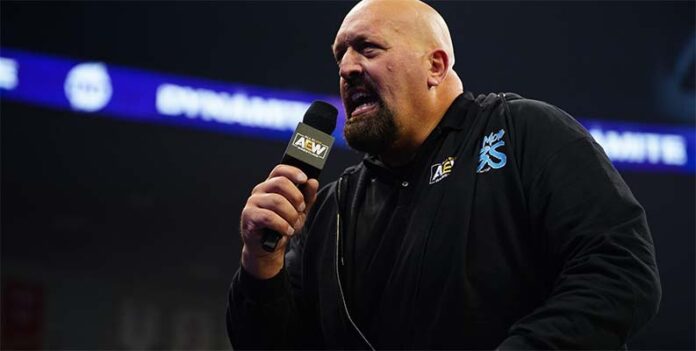
The Big Show recently opened up about being diagnosed with acromegaly as a teenager and how life-saving surgery at a young age dramatically changed the course of his life.
Speaking on the High Performance podcast, the WWE Hall of Famer explained that he initially believed his unusual size and physical abilities were simply natural gifts.
“I was 19. I thought I was just gifted, because I had incredible endurance, and I ate whatever I wanted, and I could run all day, and I was strong and all that.”
While attending Wichita State University, however, a doctor recognized signs associated with acromegaly — a hormonal disorder caused by excess growth hormone production.
“And then I went to Wichita State University, and the doctor there had worked at the Mayo Clinic and was familiar with it. He looked at my hands, and there’s different things—like the roof of my mouth is very high, and jawline, and sinuses, and stuff like that.
He says, ‘I think you have Acromegaly.’
I’m like, ‘What?’”
Big Show said the diagnosis quickly escalated into urgent medical discussions at the Mayo Clinic, where doctors informed him he needed pituitary surgery.
“And then within a week, I was at the Mayo Clinic and they’re telling me they’ve got to do this pituitary surgery.”
He explained that, despite the disorder, his naturally large family genetics likely spared him from some of the more severe physical complications commonly experienced by many people with acromegaly.
“I probably would have been—I’m lucky—I would have been big anyway. I would have been probably 6’7″, 6’8″ anyway, because my family’s big. So I got the benefits of it, but I didn’t have a lot of the trauma that a lot of people that get acromegaly go through, because they weren’t made to be bigger people.”
Doctors reportedly warned him that refusing surgery could significantly shorten his life expectancy.
“That was just a figure that I was told, because I almost didn’t get the surgery. And they were telling me, ‘Well, if you don’t get this surgery, you’ll probably be dead by the time you’re 45, because this will shut down, this will happen, this will happen.’”
Despite the seriousness of the situation, Big Show admitted that, as a teenager, the consequences still felt distant to him at the time.
“And I remember thinking like, ‘Ah, 45 is a long time away.’
I don’t know. I mean, I’m going to start my sophomore season at Wichita State. I don’t know. Maybe I should just not get the surgery.”
Ultimately, he credited his sister for pushing him to move forward with the operation.
“And I remember my sister was very adamant at the time—’No, you’re getting the surgery.’”
The surgery ultimately allowed Big Show to avoid the potentially life-threatening progression of the condition while going on to become one of the most recognizable giants in professional wrestling history.